※ What is an O-1 visa?
The O-1 is a U.S. work visa for individuals with extraordinary ability, requiring 100+ pages of evidence and up to a year of preparation before a decision is even made.
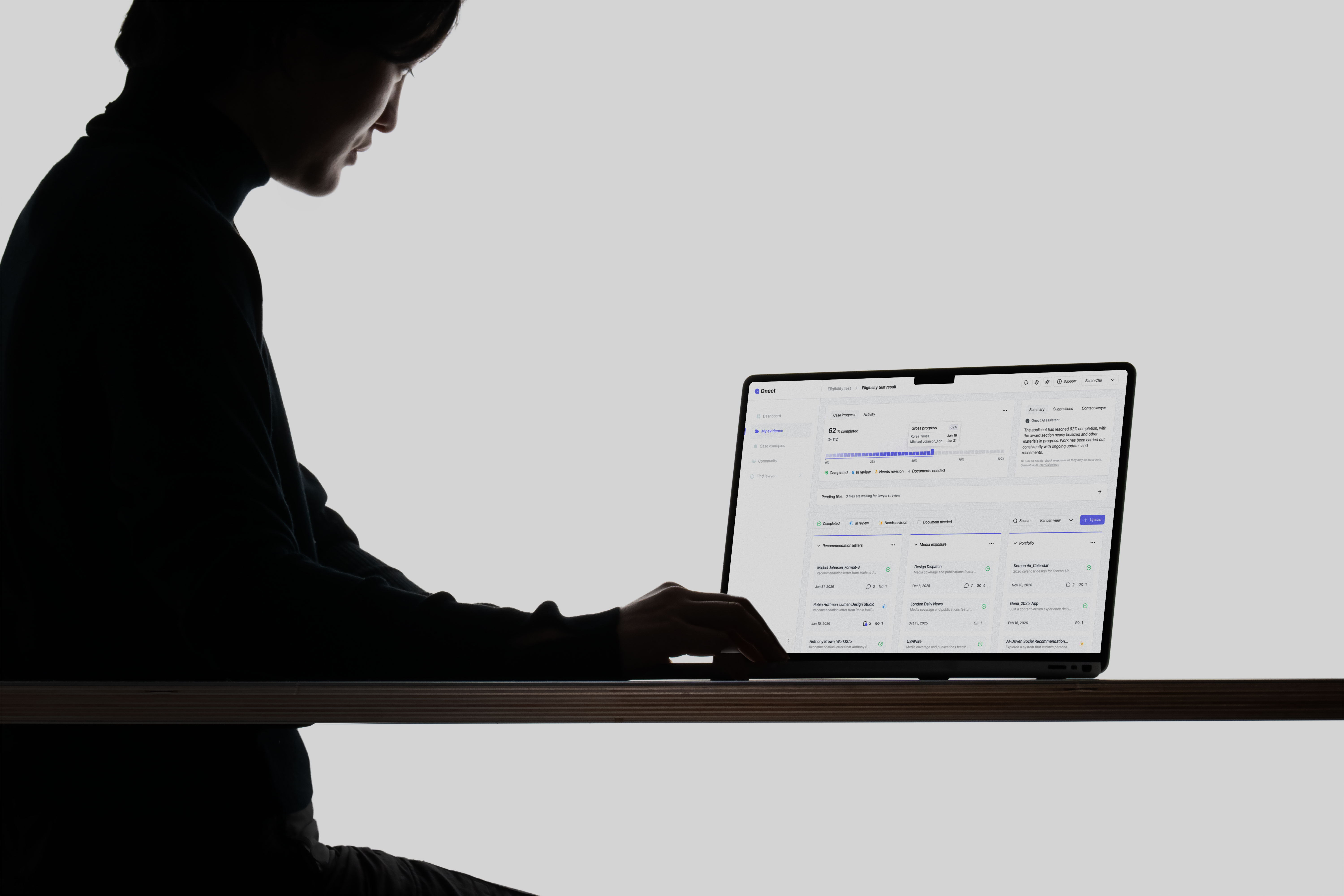
Achievement
UX Design Awards 2026
0%
Faster document filing, from 1m 28s down to 26s
0%
Better comprehension of legal documents with the AI cursor
My contribution
- User interviewsRan 3 interviews with attorneys and created affinity maps
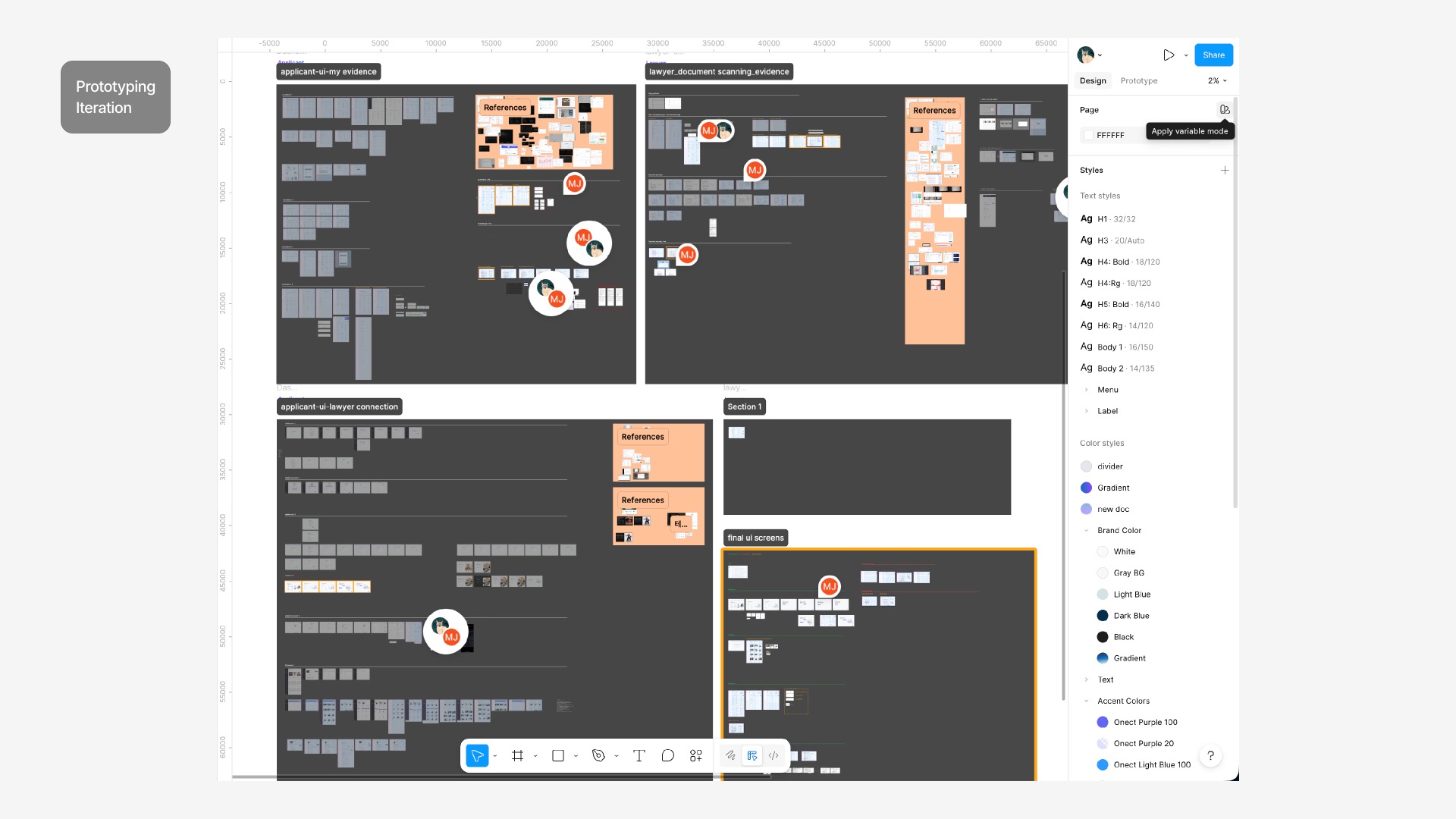
- Design systemBuilt a consistent design system that applies across the platform
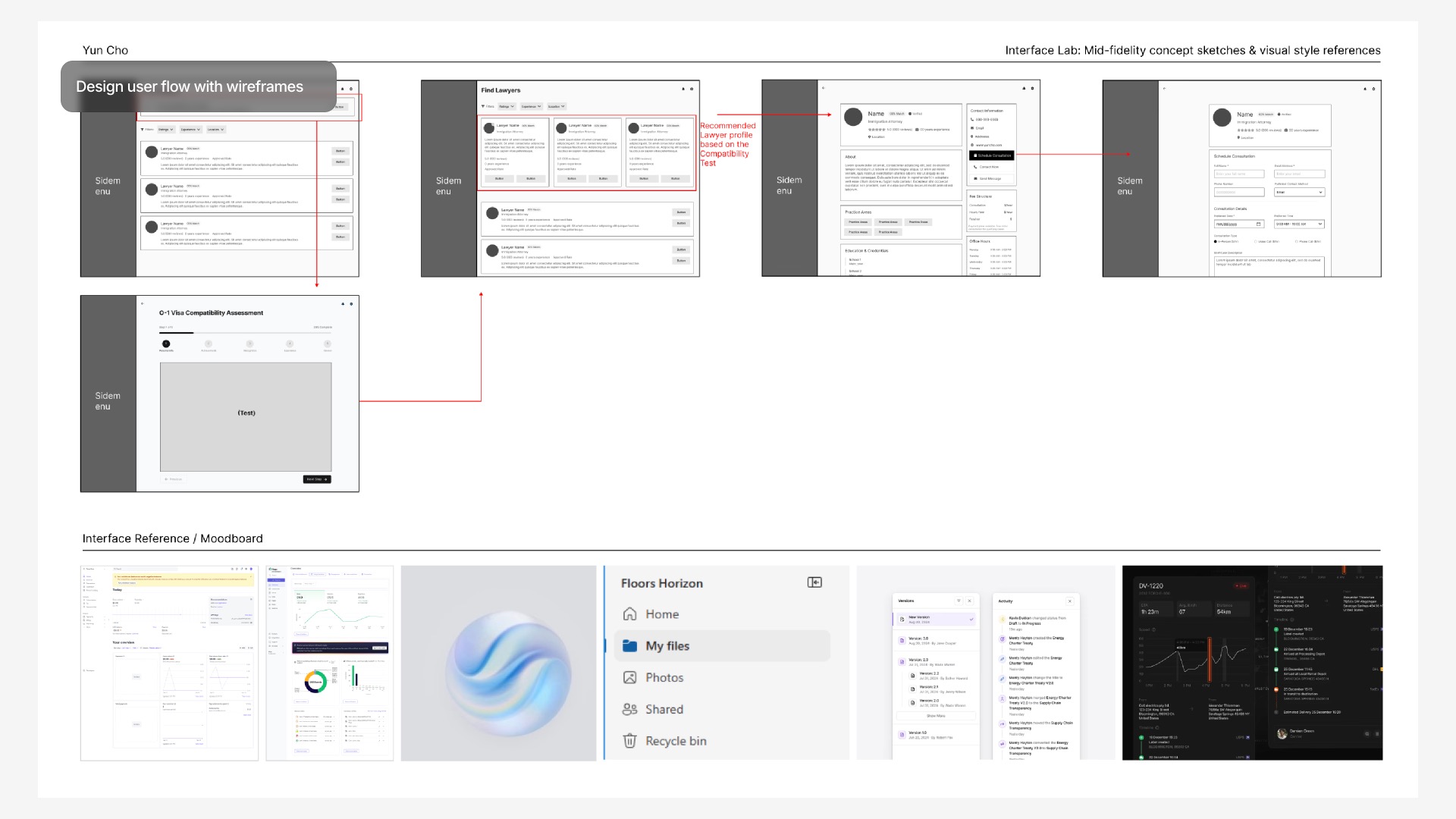
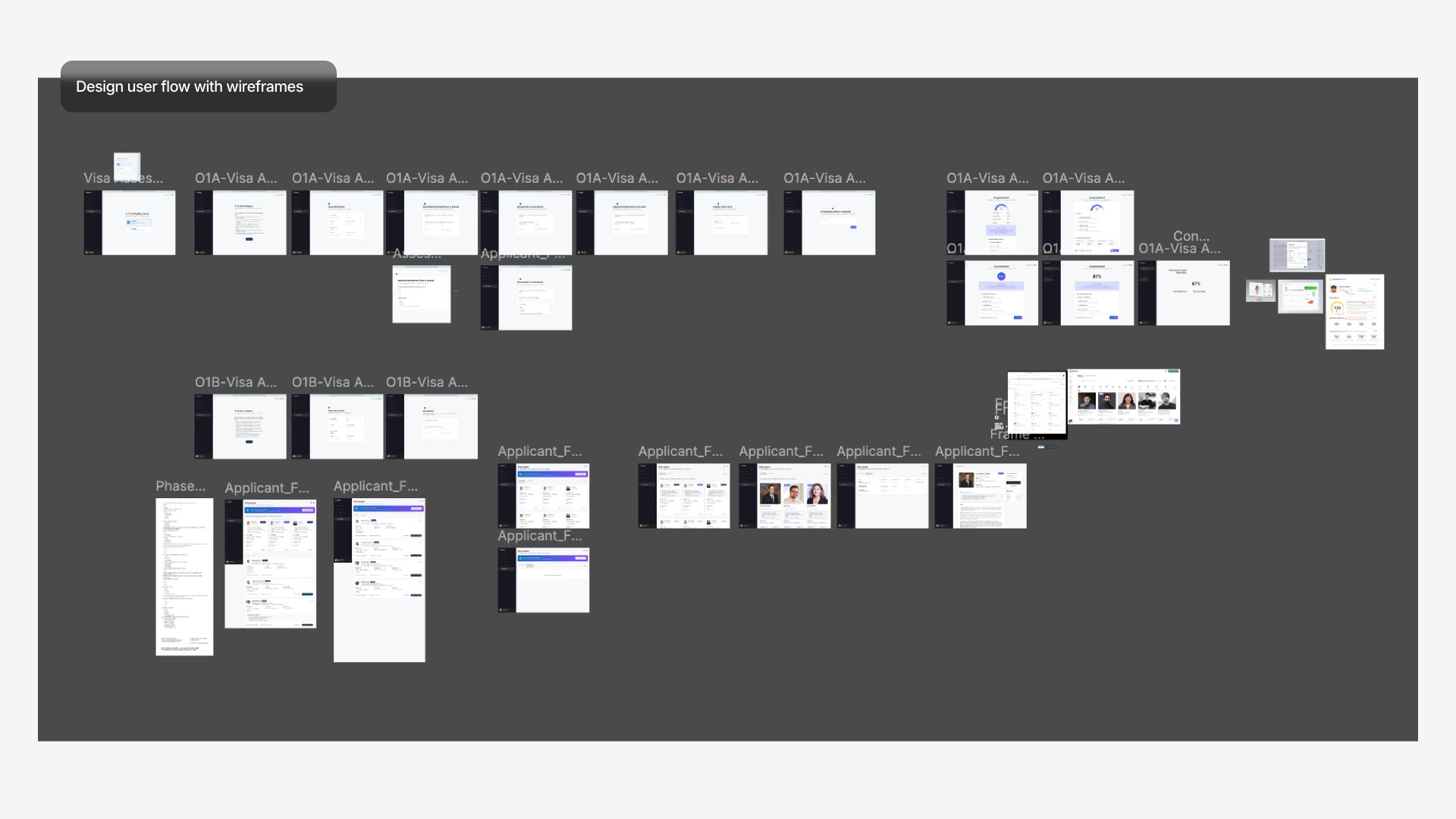
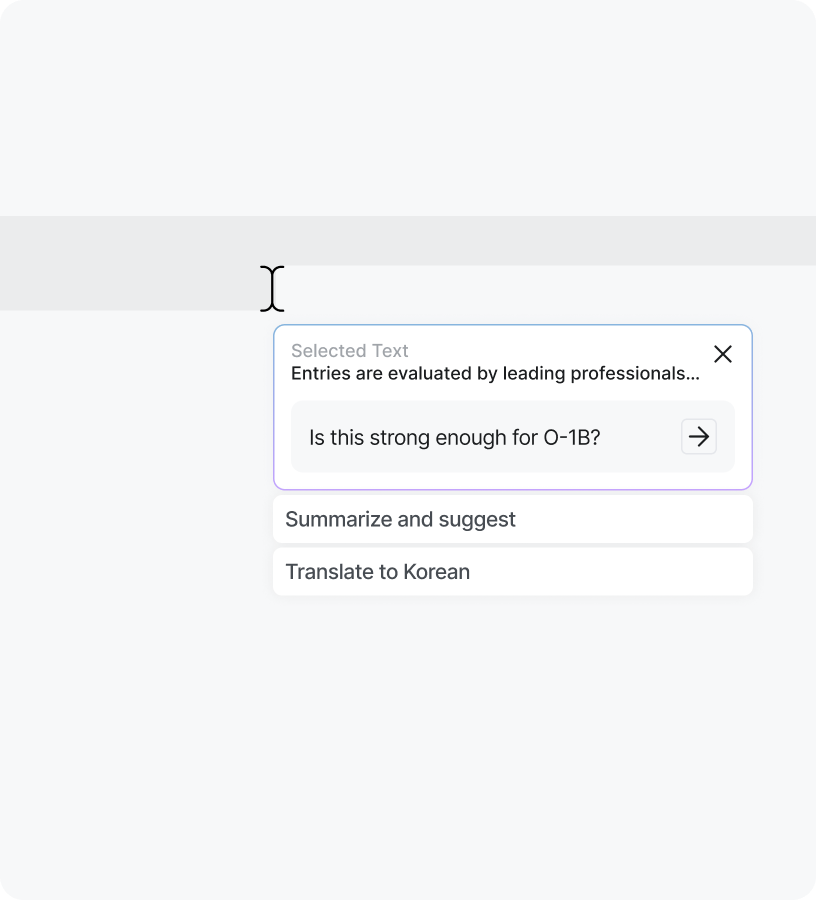
- Interface designDesigned the AI cursor, AI feedback, eligibility test, results, and profile pages
00 — Project Origin
How this started
The anxiety international colleagues carried through the O-1 process had little to do with qualifications. It came from the experience itself: no feedback, no structure, and no clear way to know whether the evidence they had assembled told a convincing story.
The law wasn't the broken part. The experience was. Nobody had built something that served both the applicant trying to understand their own case and the attorney trying to evaluate it efficiently.
Design Challenge
How do we redesign the O-1 visa experience so applicants feel confident and in control, while helping attorneys stay focused on legal work, without disrupting the workflows they already rely on?
01 — Problem
Problem:
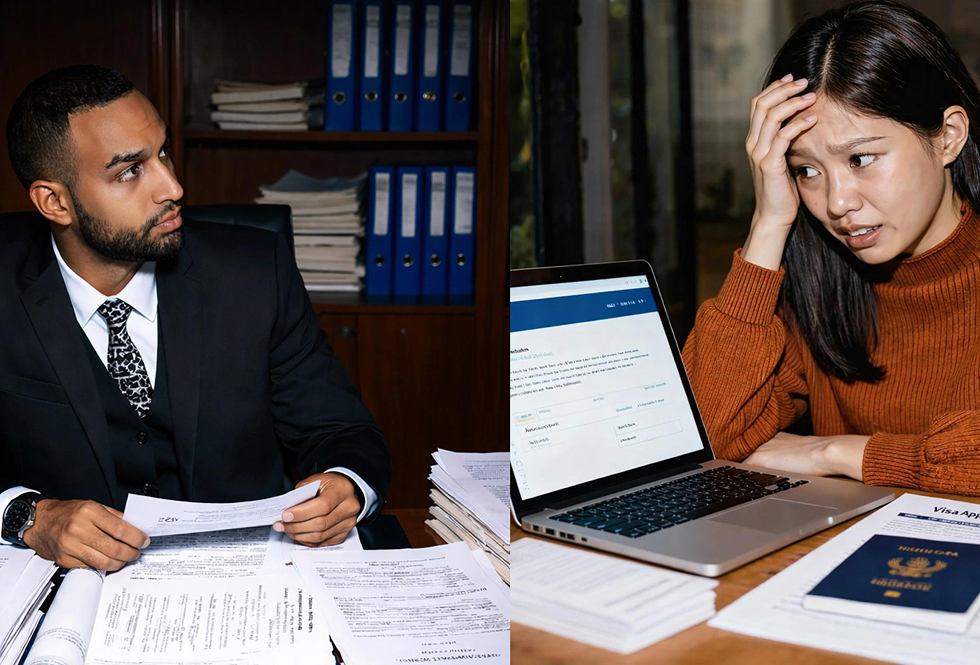
Two user types.
Completely opposing needs.
“Everyone said hire a lawyer and you'll figure it out, but that wasn't true.”
User 1: Applicant
Applicants are left feeling powerless by a lack of communication from their lawyers and deeply frustrated by an inability to track their own progress.
User 2: Attorney
On the attorney side, the problem is inverted: too many clients, too little structure. Attorneys spend most of their intake time reviewing documents that don't meet the threshold. An earlier filter could have caught those.
What's at stake
When the visa process is this overwhelming, people who would otherwise qualify give up before they start. That's the part I kept coming back to.
02 — Goals & Constraints
Goals and real-world limits
Product Goals
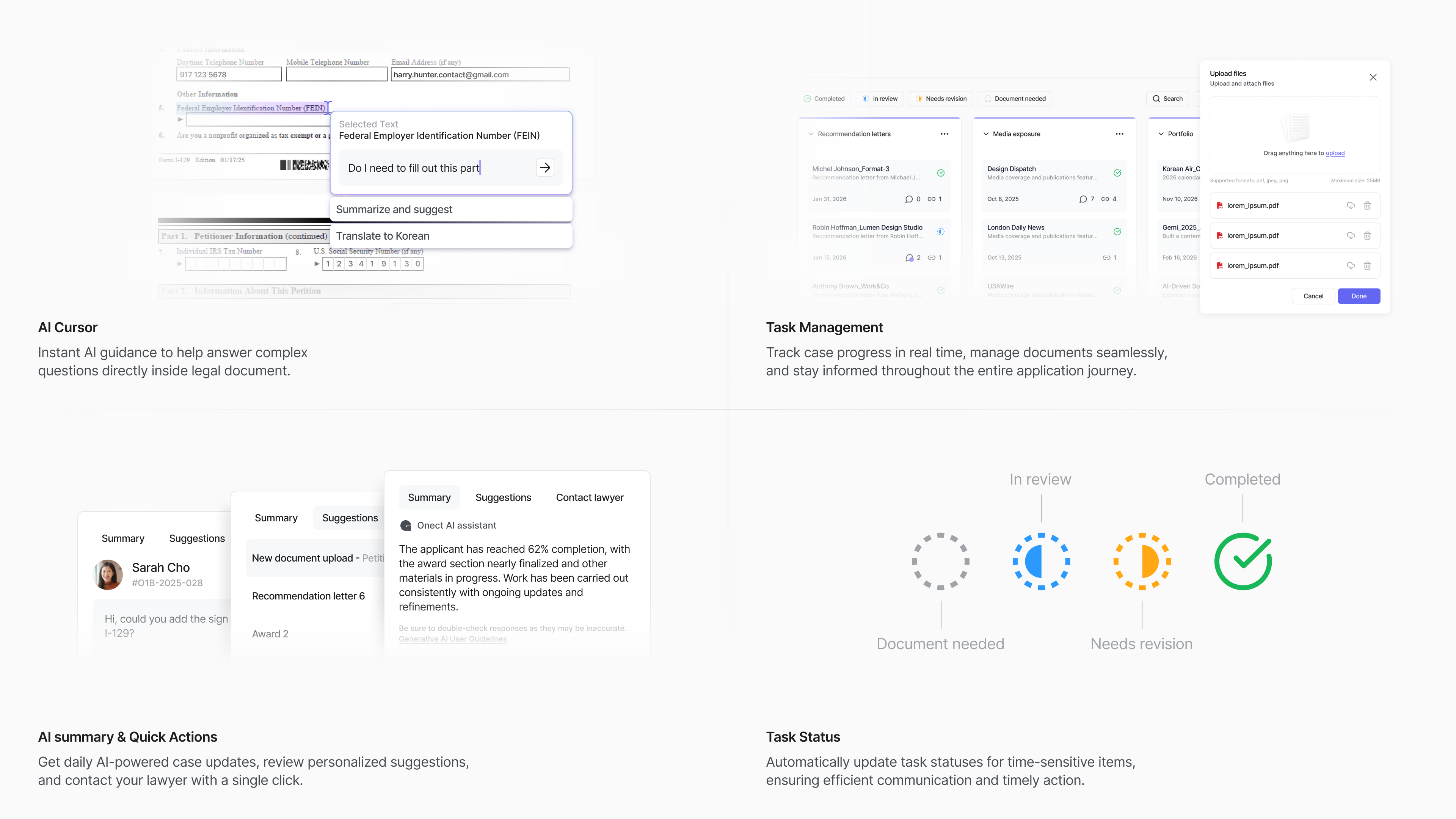
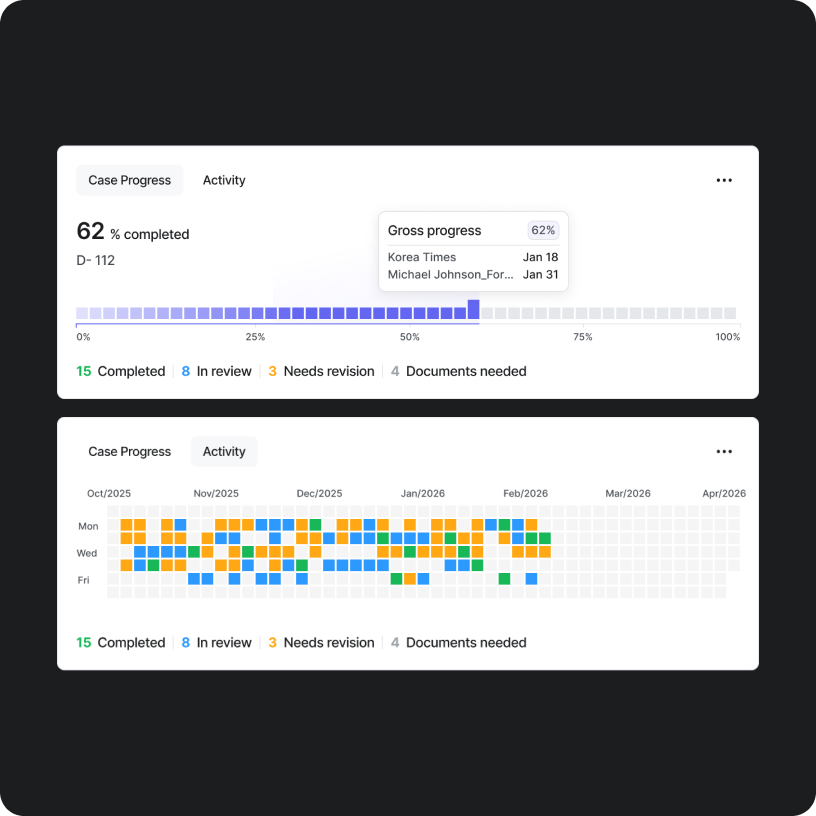
- Give applicants real-time visibility into their case progress and clear next steps, so they never feel lost
- Let applicants self-assess their eligibility before committing to legal costs, while giving attorneys a way to filter qualified leads from the start
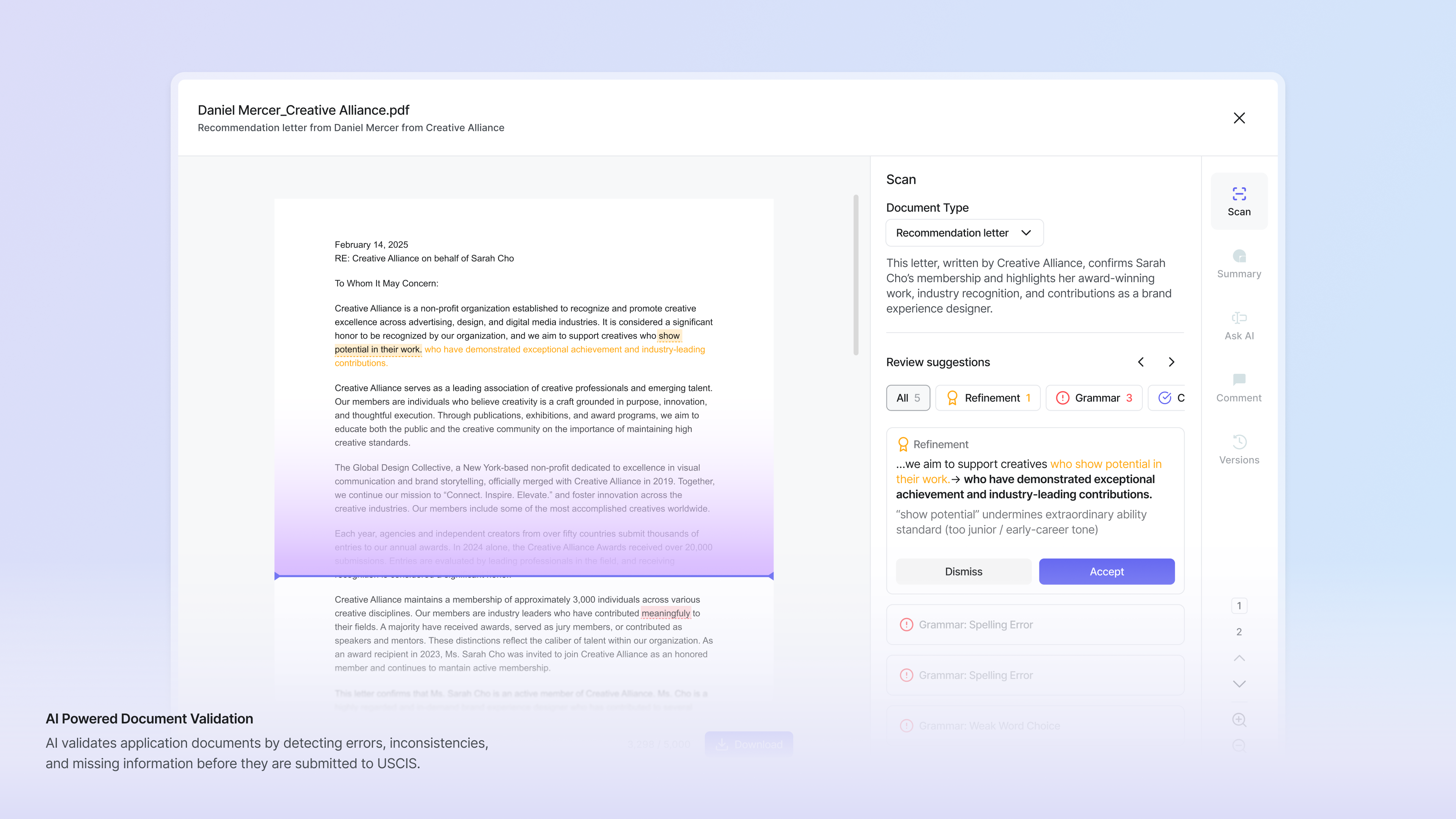
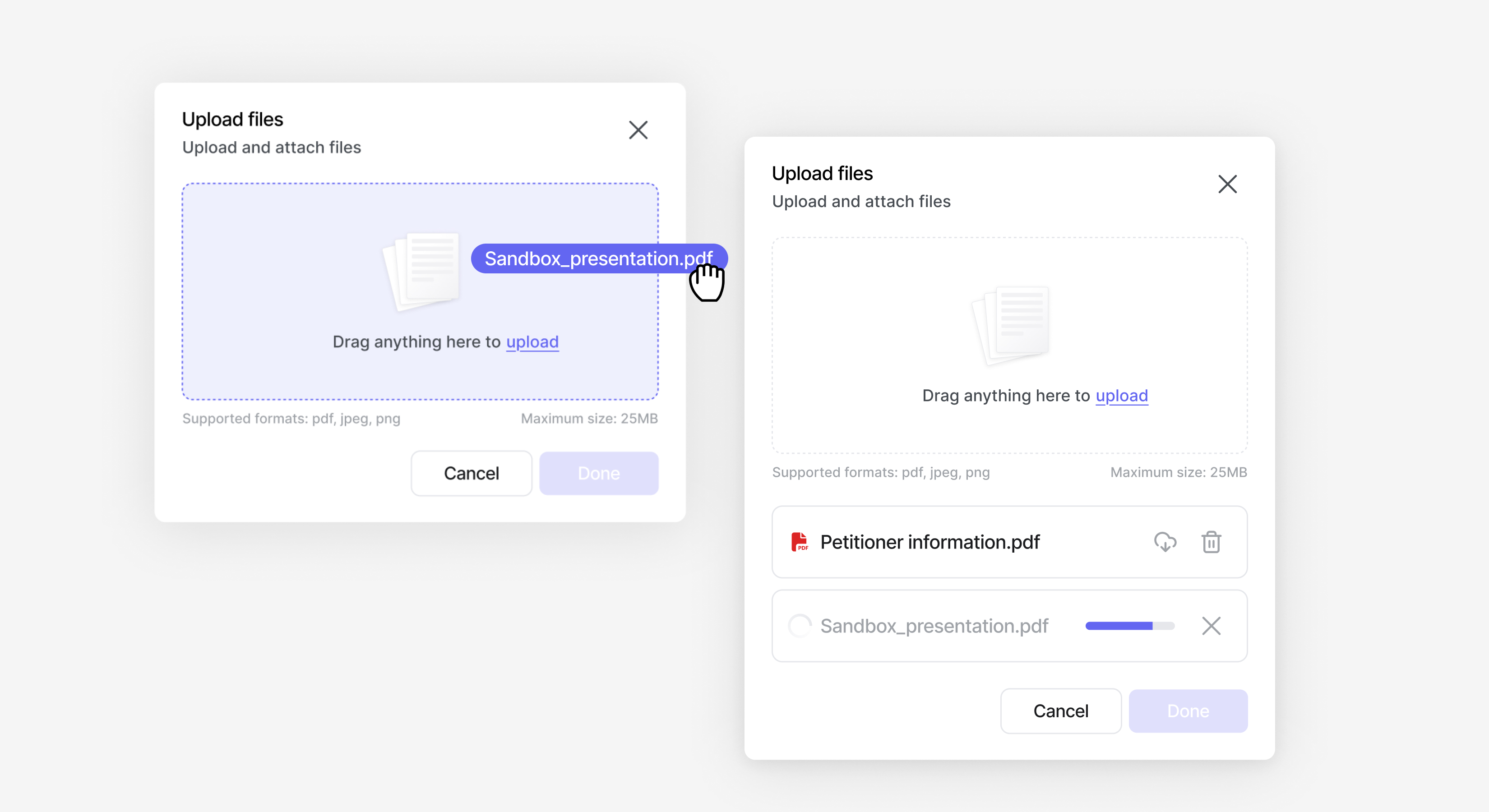
- Reduce attorney intake friction through intelligent document classification and proactive error detection
- Design a system where AI accelerates the process but humans remain accountable at every decision point
Constraints
- Legal sensitivity: The product cannot give legal advice. Every AI-generated output needed to be clearly framed as guidance, not counsel
- Low willingness to switch: Attorneys already have document workflows. Any tool that required a full behavioral change would face immediate rejection
03 — Research & Insights
Seven conversations, one direction
Method
We spoke with 4 applicants who had recently received their O-1 visa and 3 immigration attorneys specializing in O-1 cases. Findings were synthesized via empathy mapping, then reframed using Jobs-to-be-Done to separate surface complaints from root causes.

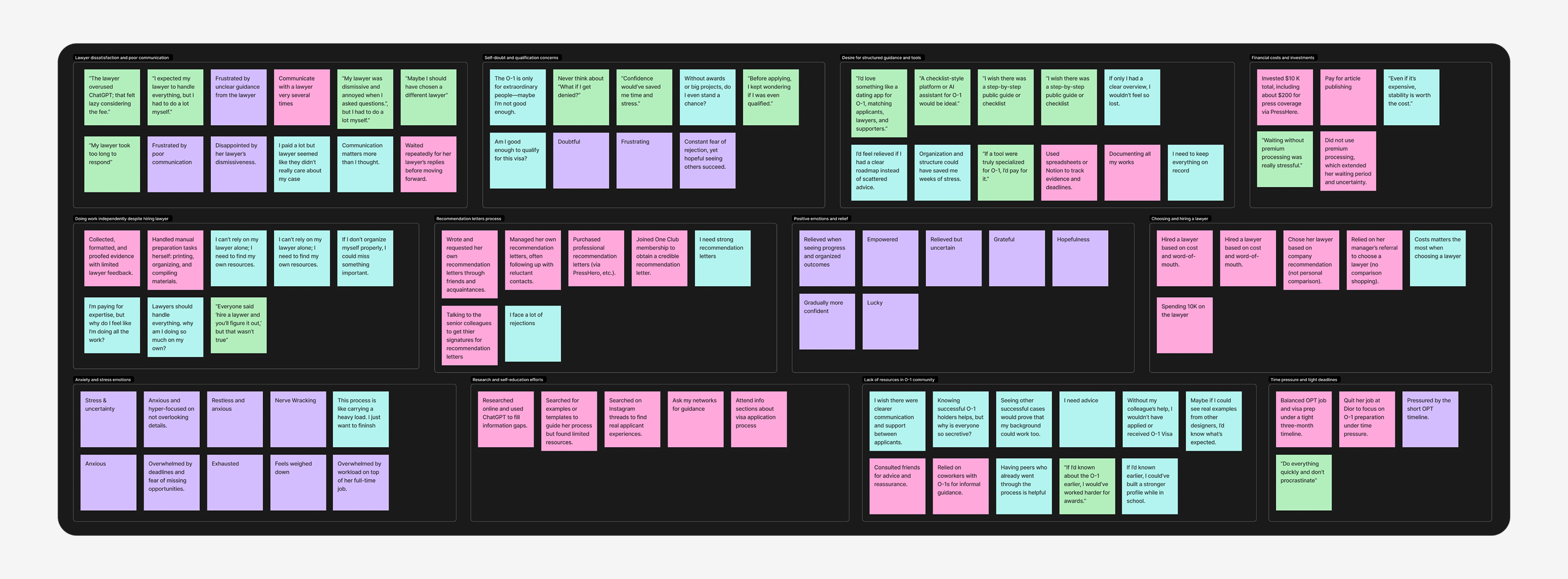
Key Jobs-to-be-Done
“Organization and structure could've saved me from weeks of stress.”
— Applicant B
“My lawyer was dismissive and annoyed when I asked questions, but I had to do a lot myself.”
— Applicant C
“A trustworthy platform must pre-qualify applicants accurately.”
— Attorney A
“We focus heavily on preventing RFEs (Request for Evidence) by having the highest quality of work.”
— Attorney A
Applicants' Jobs to Be Done
- When my case is in progress, I want real-time visibility into where things stand so I never have to chase my attorney for updates.
- When I don't understand a legal requirement, I want an immediate answer so I'm not stuck waiting days for a simple response.
Attorneys' Jobs to Be Done
- When evaluating a new client, I want to quickly assess their eligibility upfront so I don't waste hours on cases that won't qualify.
- When reviewing a petition, I want documents automatically flagged for errors so I can focus on legal strategy, not manual paperwork.
The process is stacked against the people it's supposed to serve
Method
Seven interviews is a small sample by research standards, so we triangulated the findings against public USCIS adjudication data and a competitor audit of 8 existing tools to strengthen the patterns we were seeing.
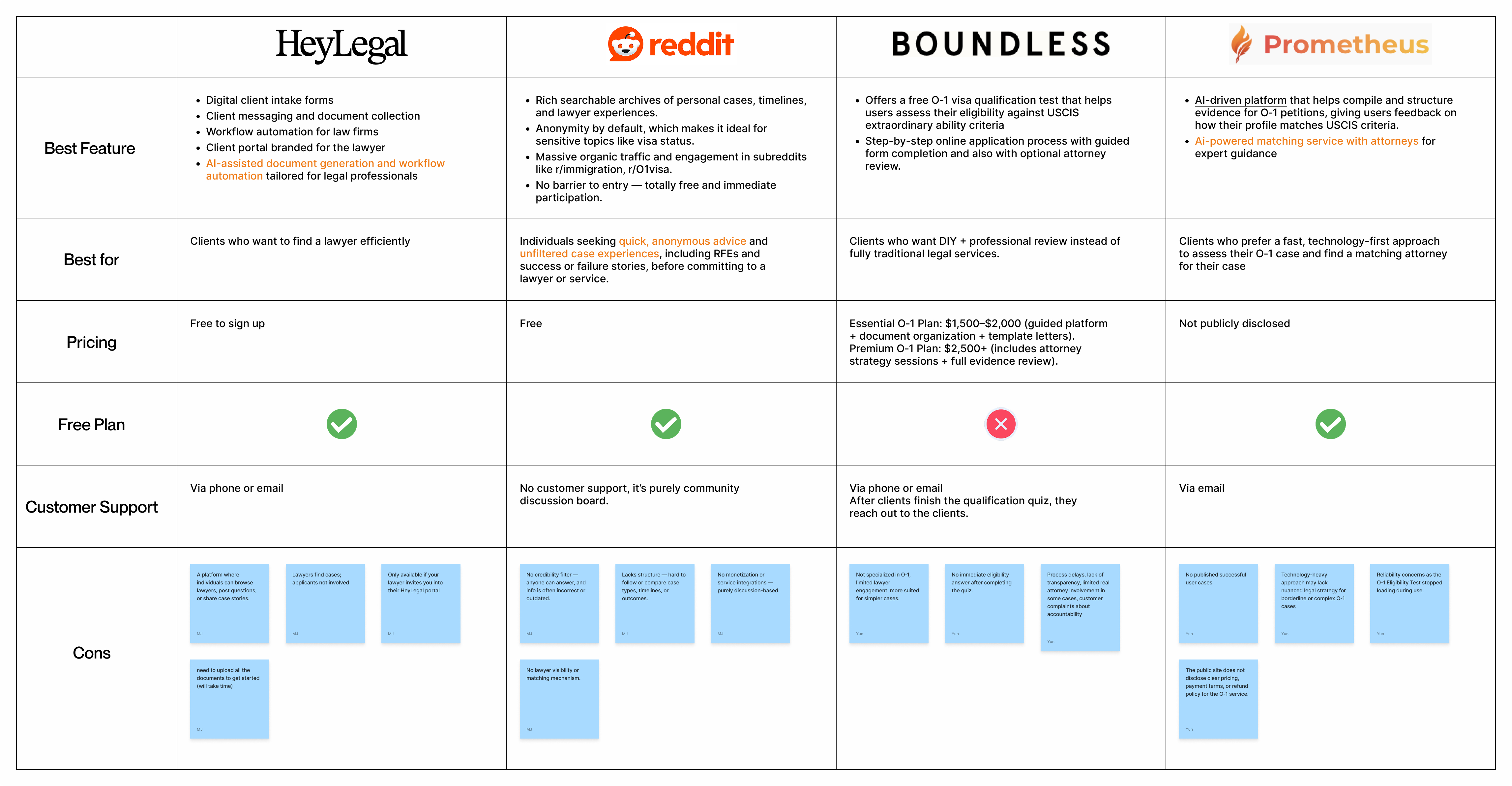
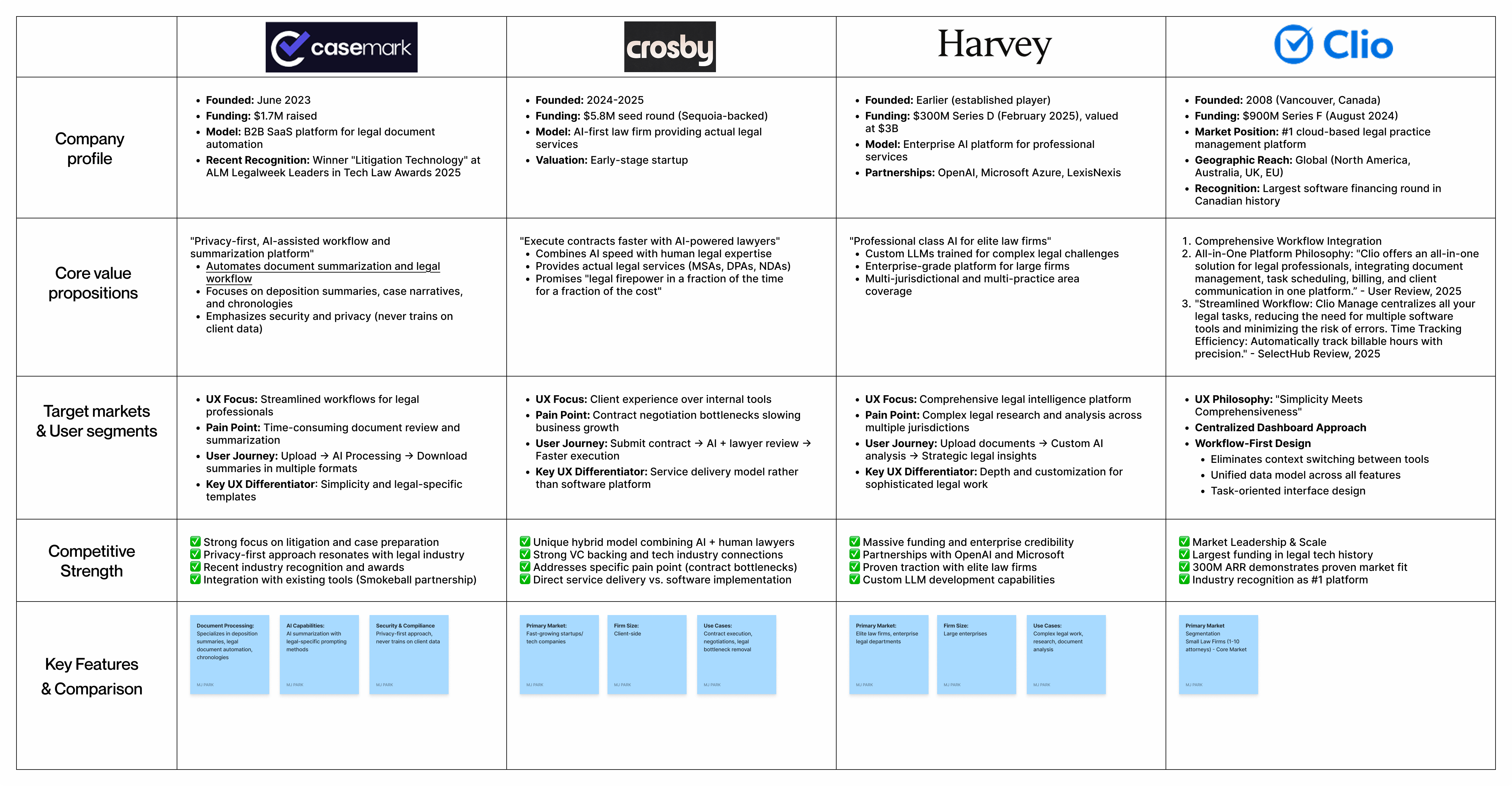
Existing tools (immigration SaaS, attorney portals, USCIS guides) were built around the filing process, not around the people in it. None served both sides. Most either served attorneys only or treated applicants as people who just drop off documents.
04 — Ideation & Direction
Designing for two users who want completely different things
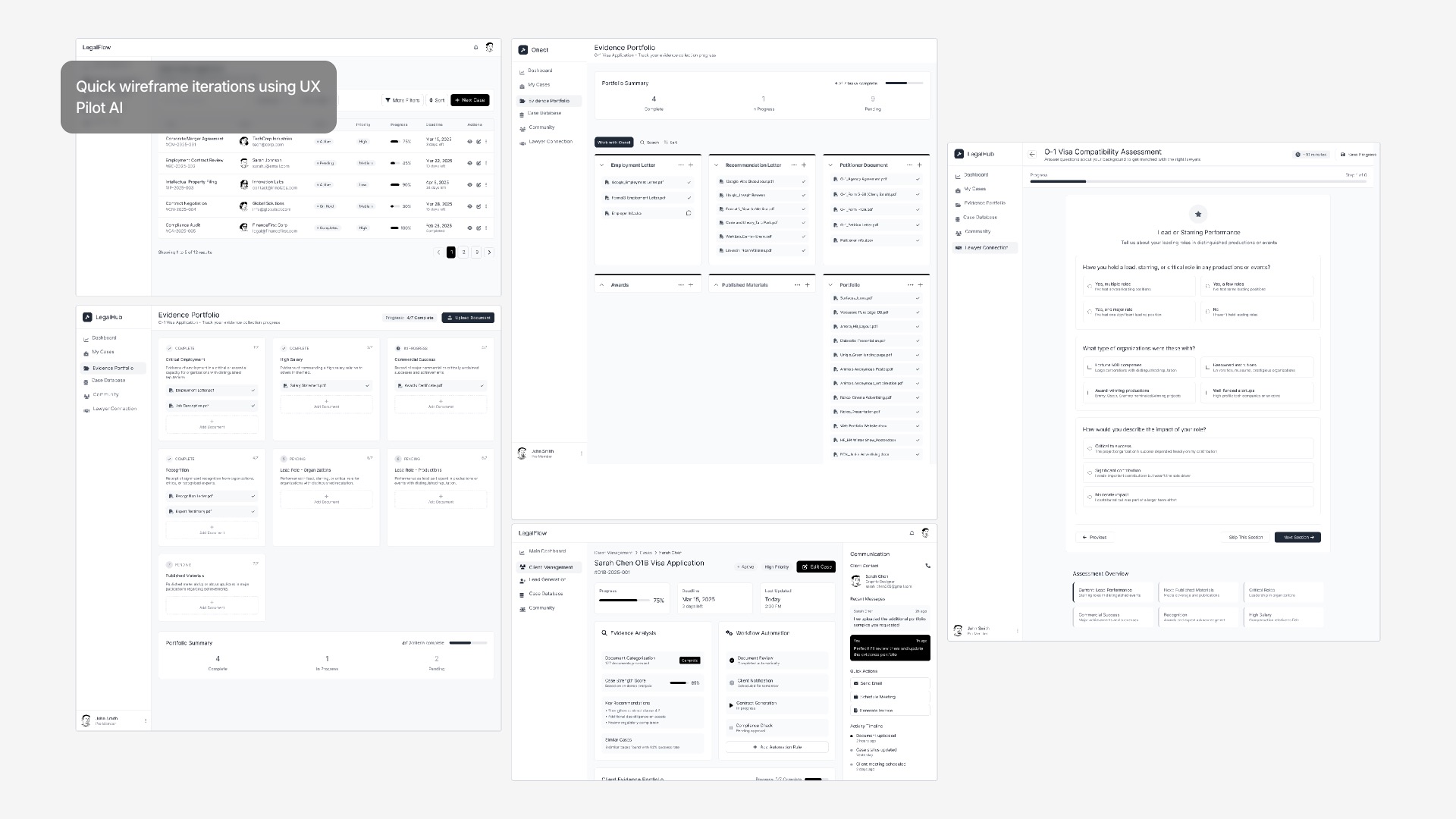
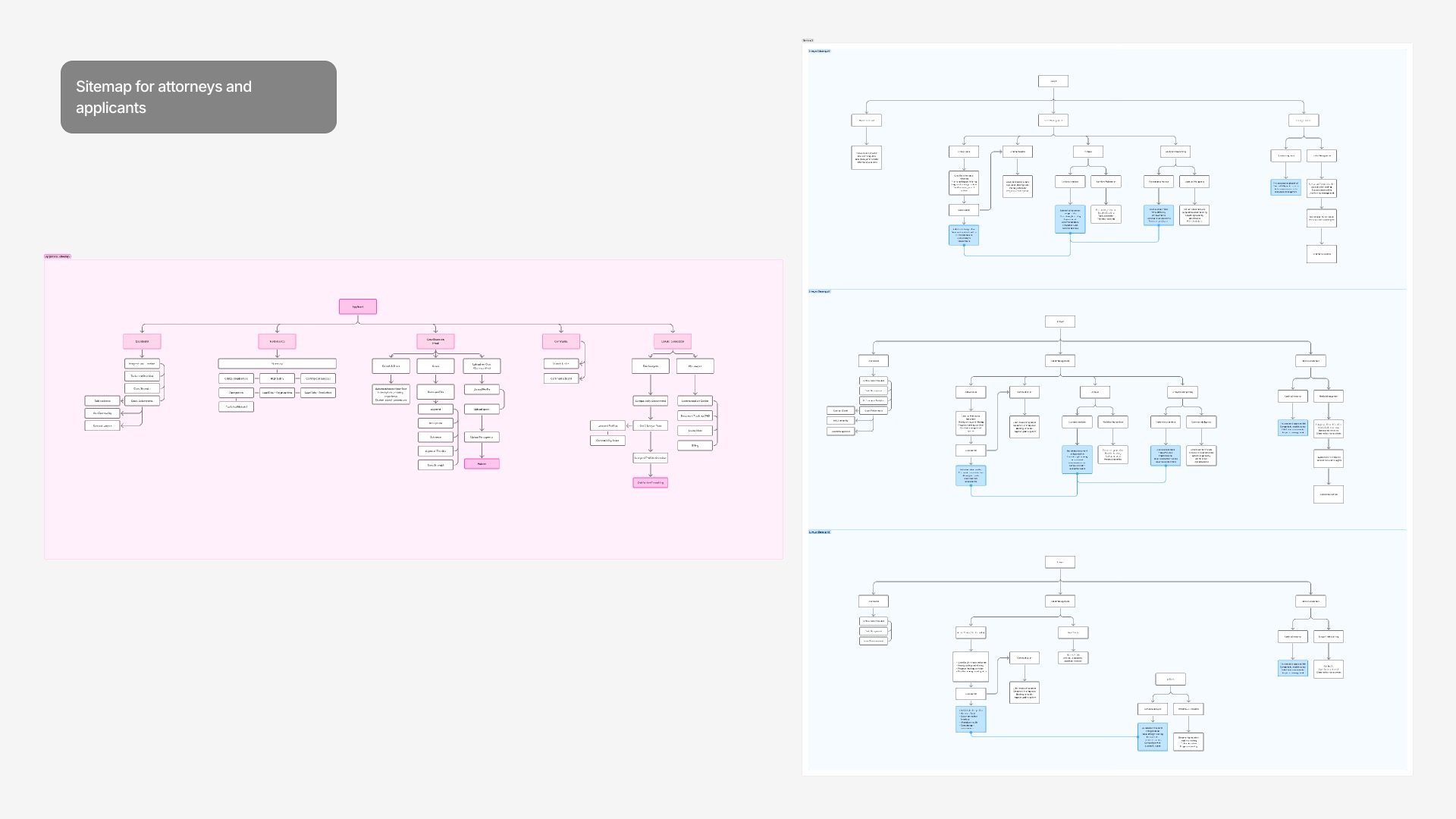
With two users pulling in opposite directions, our first ideation challenge was structural: should this be one product with dual views, or two separate products sharing a backend?
The wrong answer here would create either a product that felt incoherent to both users, or two products that couldn't share the same case data.
Design principle
We could have automated more. But in legal processes, one wrong assumption can derail someone's entire case. So every AI action needed a person to sign off. Not because the tech couldn't go further, but because a wrong call can wreck someone's case, and trust doesn't come from automating that away.
05 — Solution
Solution: A system that serves two users without compromising either
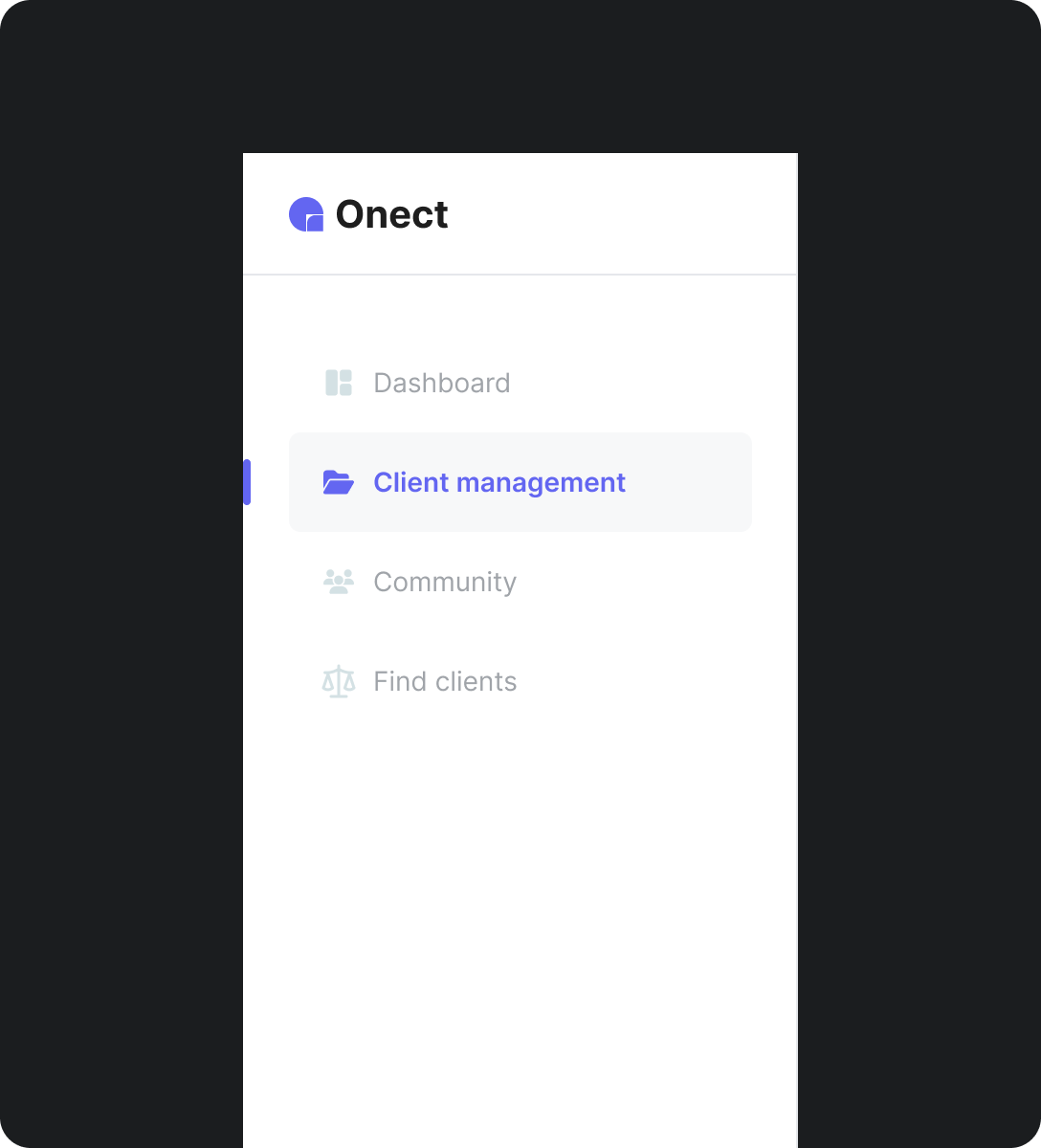
Onect AI is one platform with two views. Applicants and attorneys share the same case data, but they never see the same screen. Applicants get clarity and next steps. Attorneys get speed without having to change how they already work.
06 — Design system
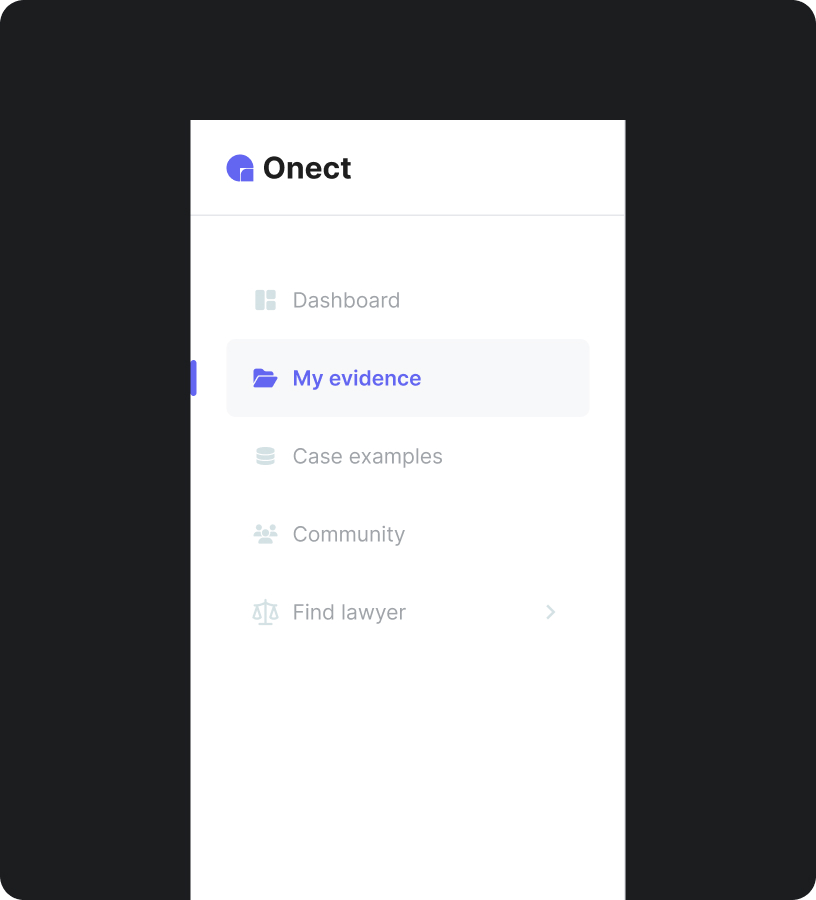
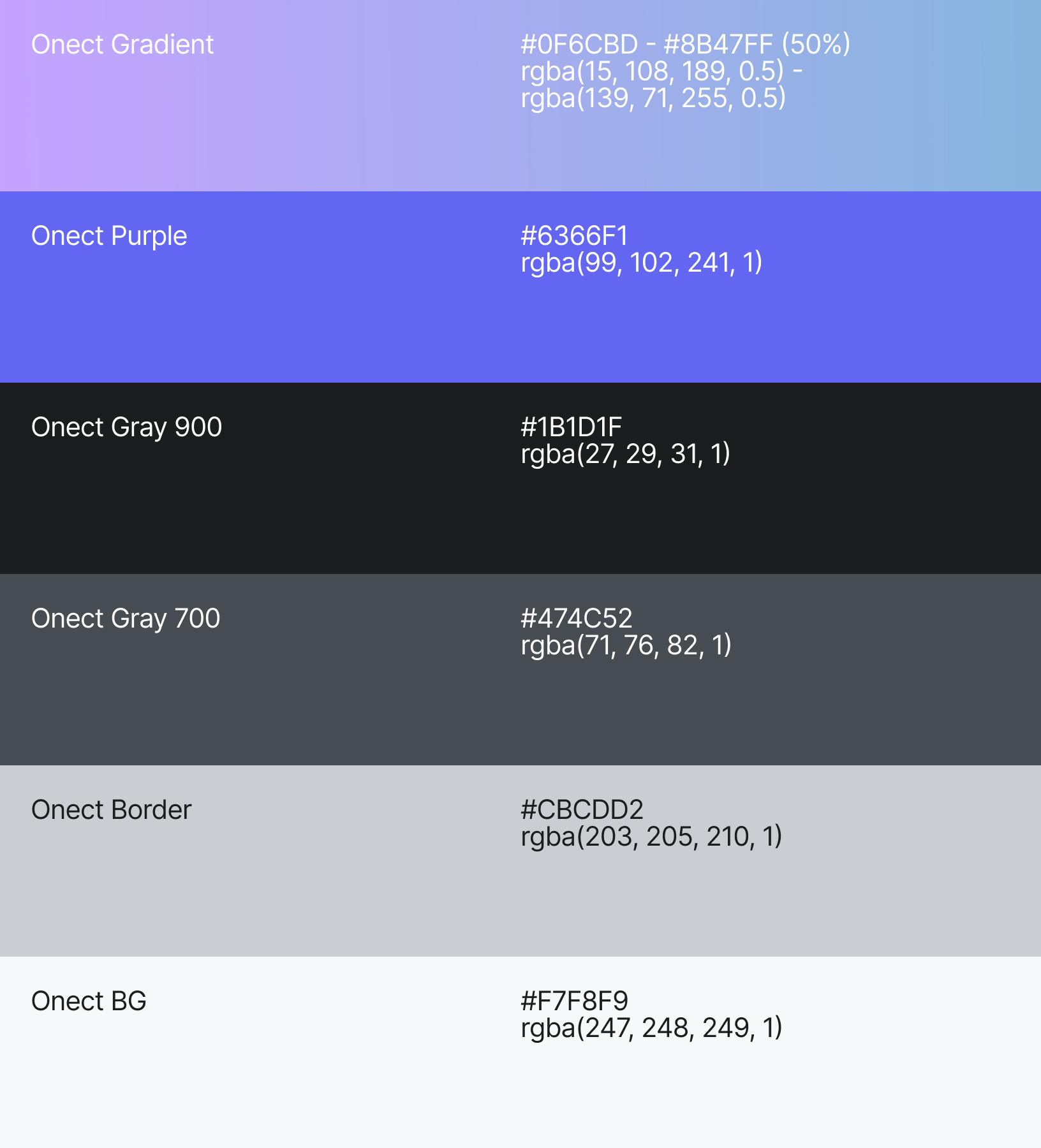
Looking like a product you can trust
The visual language had to do two jobs at once. It needed to feel capable, and it needed to feel safe enough for someone's most sensitive documents.


Reflection
What I learned
In this kind of work, trust and usability are not the same job. A screen that feels a little plain but honest will beat a polished one people can't read. Showing how the AI reached a conclusion wasn't optional.
The next phase of this work involves end-to-end PII encryption architecture, a financial model that doesn't require applicants to pay attorney rates for AI-assisted guidance, and a data layer that gets more accurate as more petitions flow through it.