Research scale
0
Public survey respondents
0
ADHD-specific survey + focus group
My contribution
- User researchPublic survey, ADHD focus group, and literature review
- Product design0→1 UX, prototyping, visual design, and design system
- 3D & animationPersonalized gemstone growth metaphor and motion
00 — Project Background
A comment section that became a thesis
It started in a YouTube comment section. While watching a video about ADHD, I scrolled through replies from people describing a lifetime of being told they were lazy, irresponsible, and not trying hard enough, often without ever getting a diagnosis.
I have ADHD, so the pattern was familiar. People weren't failing from a lack of effort. They were failing from a lack of feedback.

01 — Problem
Why am I always so lazy?
Not a productivity problem.
A reward problem.
Adults with ADHD face a measurably worse set of outcomes than the general population. Not because they're incapable, but because the systems they're asked to succeed in weren't built for how their brains handle motivation and reward.
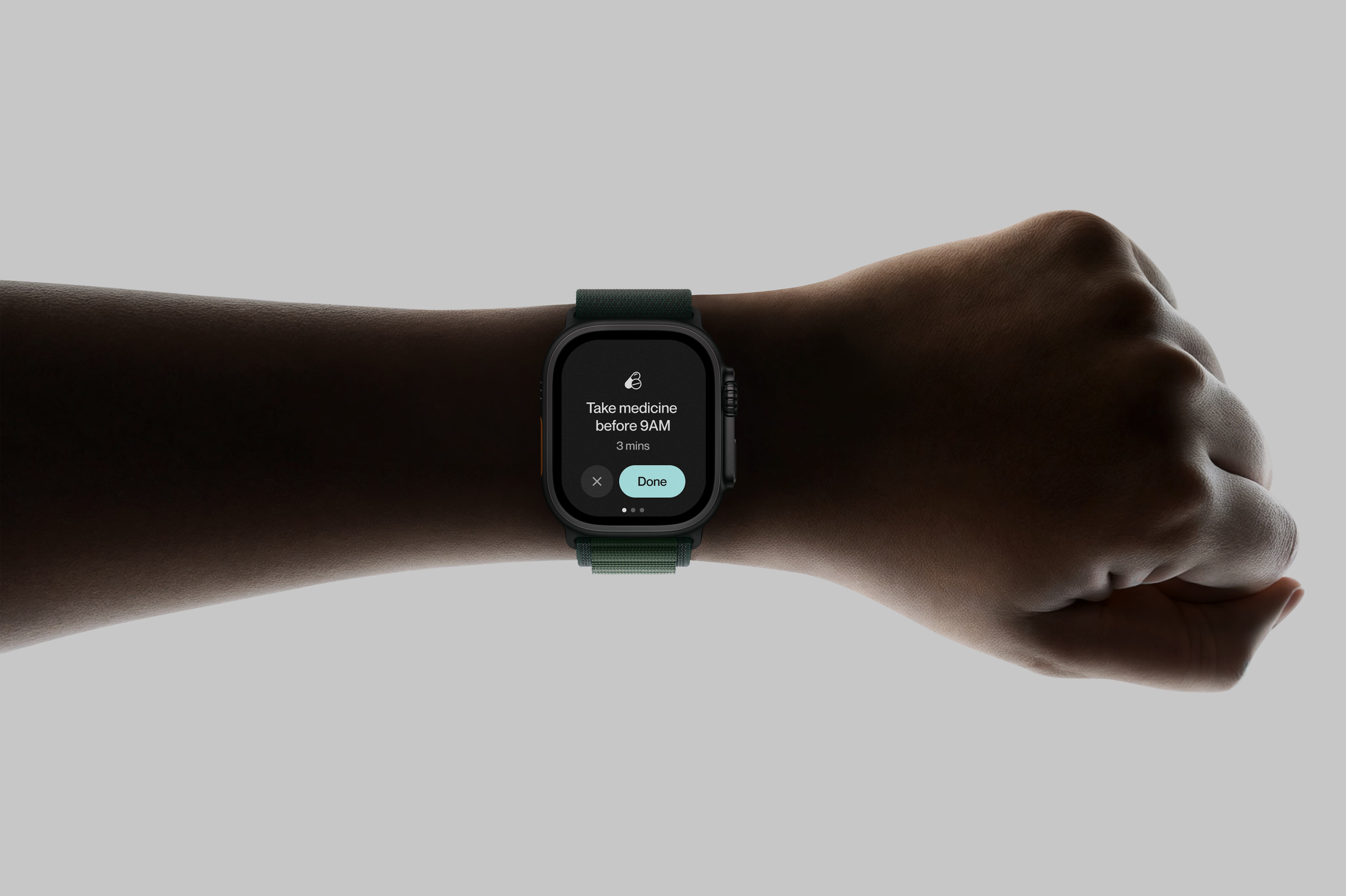
The product problem is simple: no existing planning tool gives people with ADHD feedback that actually feels rewarding.
Academic gap
Mental health
Root cause
Tool failure
02 — Goals & Constraints
What I was aiming for, and what I had to work around
Product Goals
- Replace shame-driven tracking with a reward system that makes task completion feel meaningful
- Create a visual identity and growth metaphor that users can emotionally connect with over time
Constraints
- No clinical oversight: the product is not a medical tool. Design decisions had to stay on the motivational and behavioral side without making clinical claims.
03 — Research & Insights
Looking at the same problem from a few directions
Method
Stream 1: Public survey (n=110)
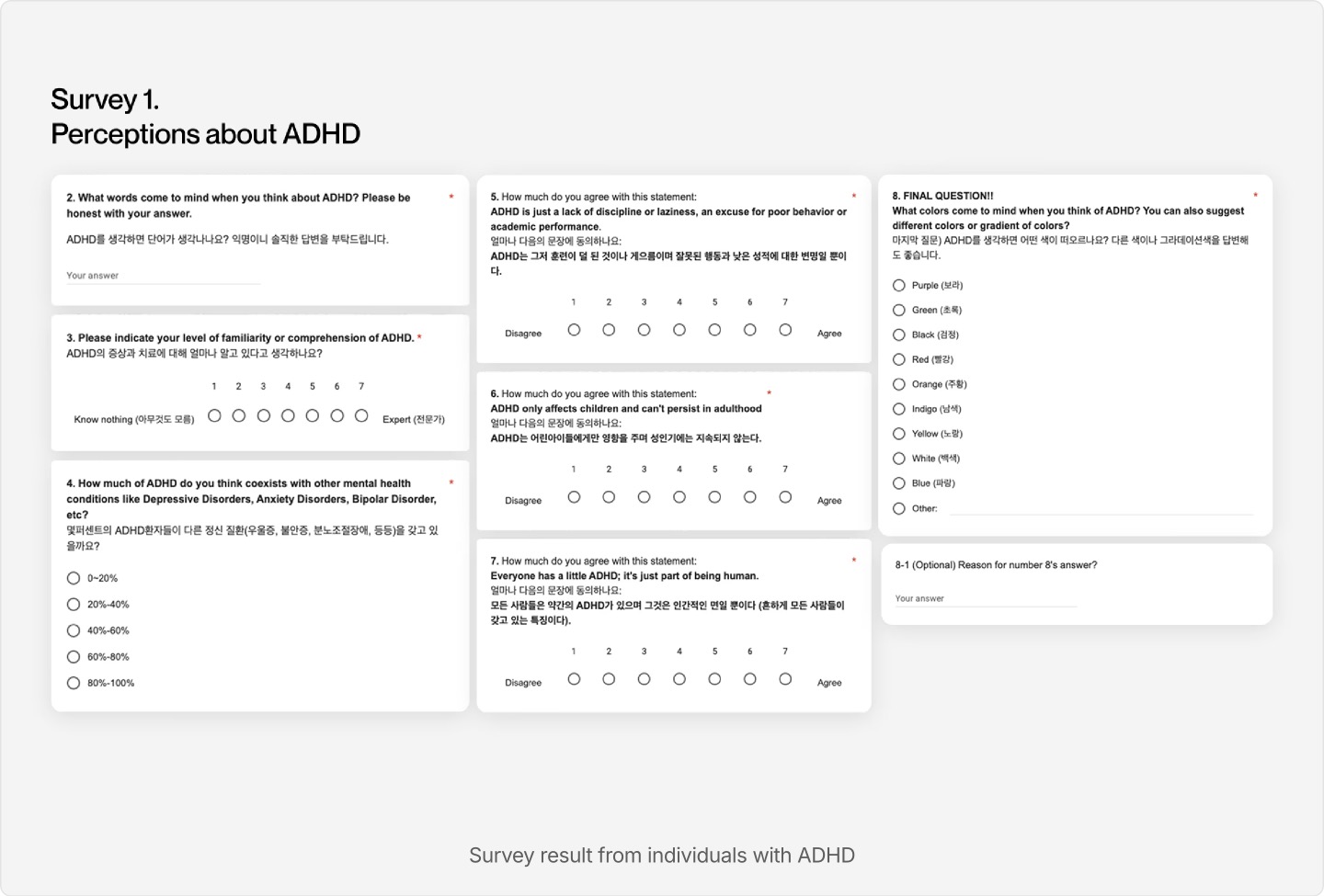
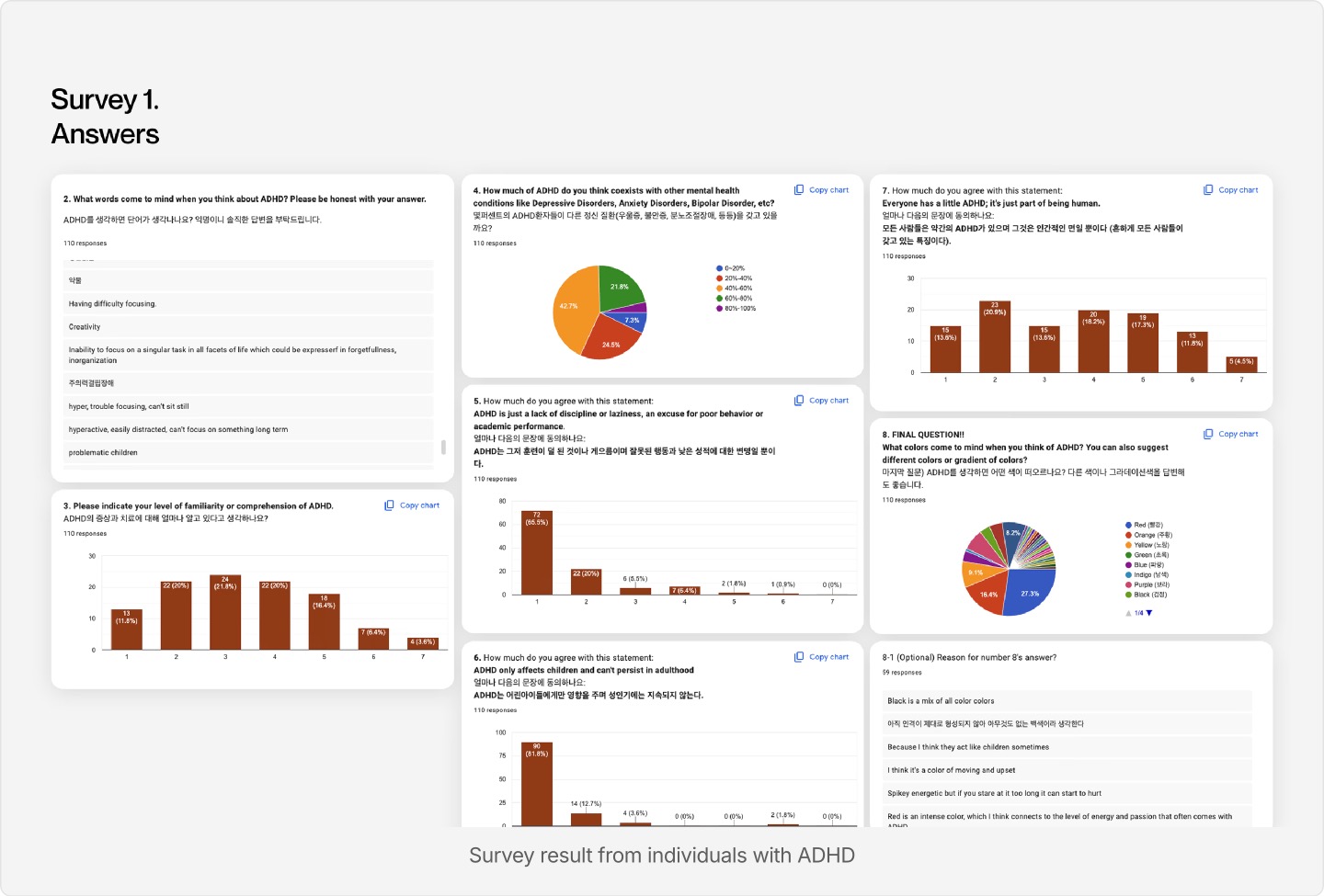
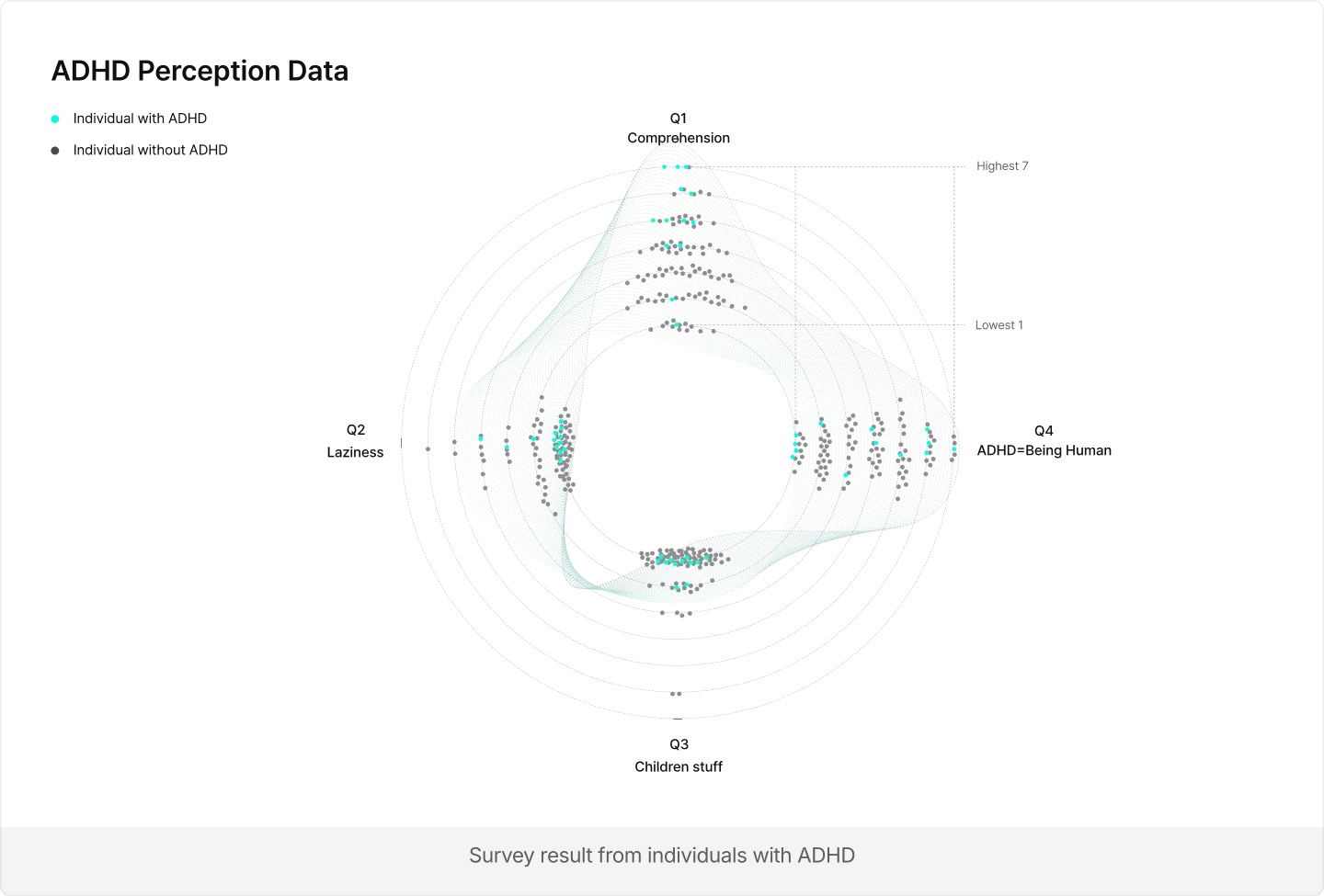
I surveyed 110 people ages 18–50, including 97 without a diagnosis and 13 with one. The goal was to see how ADHD is perceived socially, and whether stigma was shaping whether people asked for support or stayed away from it.
Key finding
A significant portion of respondents equated ADHD with “just being human,” associating it with laziness or a lack of discipline rather than a neurological condition. That misperception is tied to delayed diagnosis, internalized shame, and avoiding the support tools that could help.
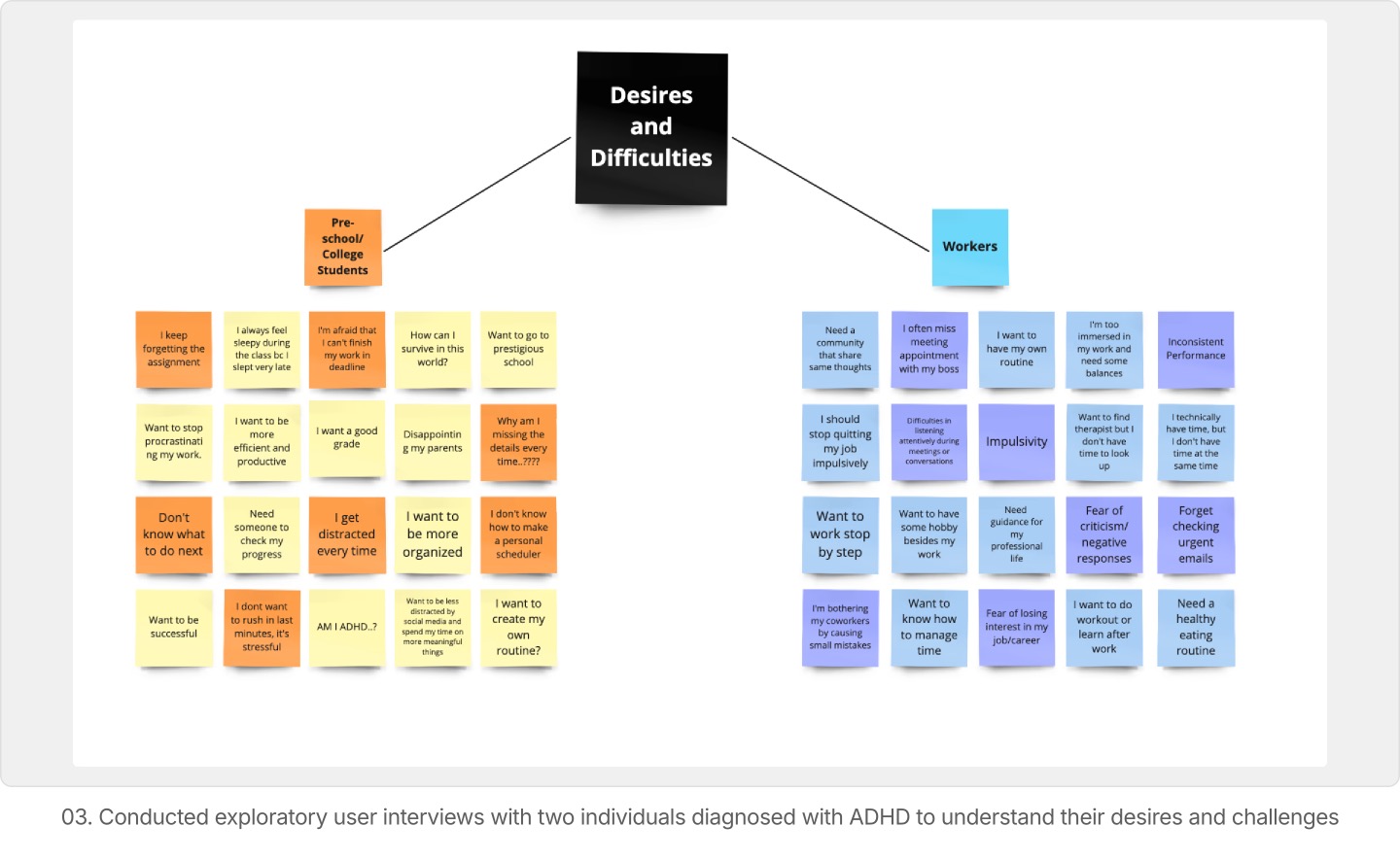
Stream 2: ADHD-specific survey (n=11)
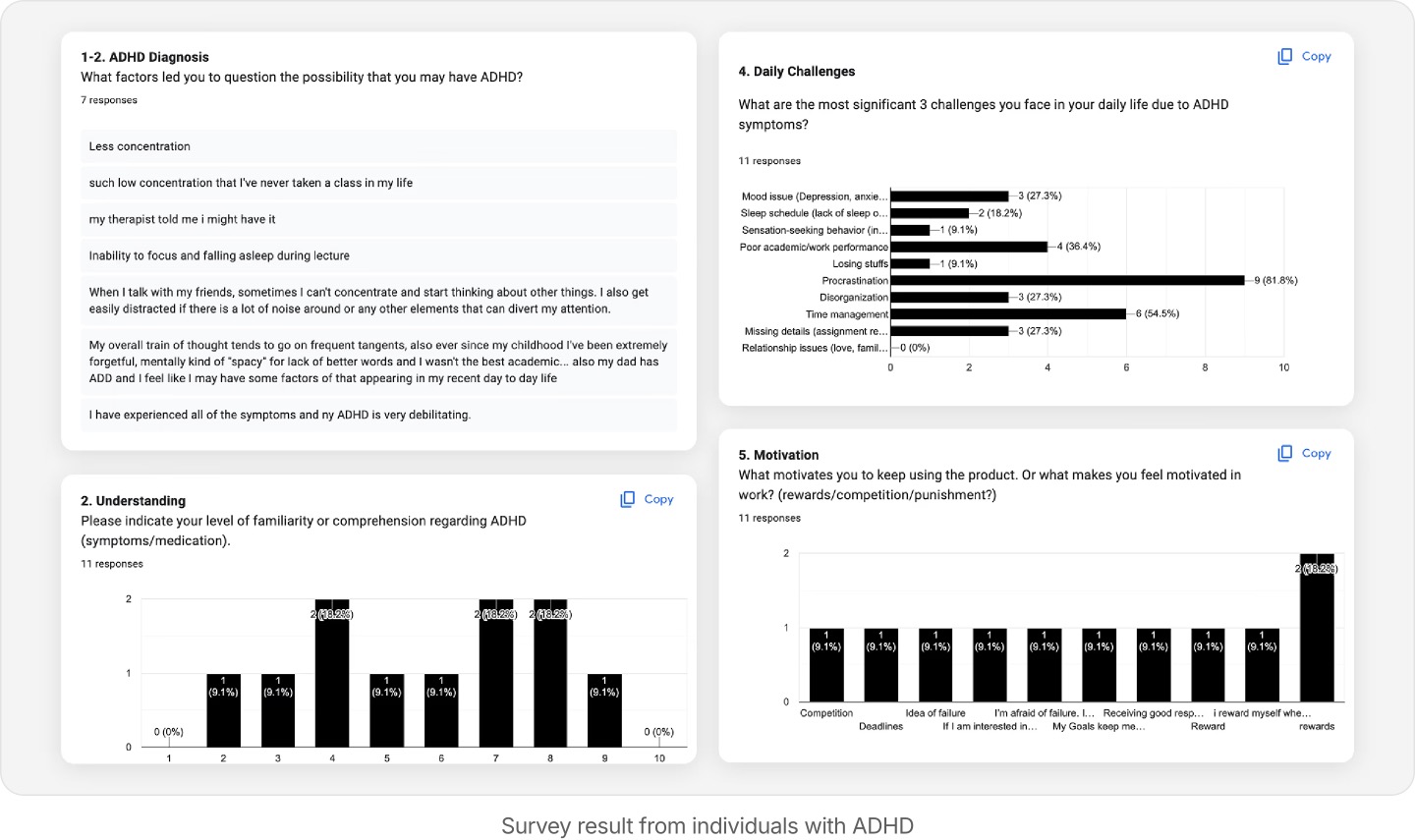
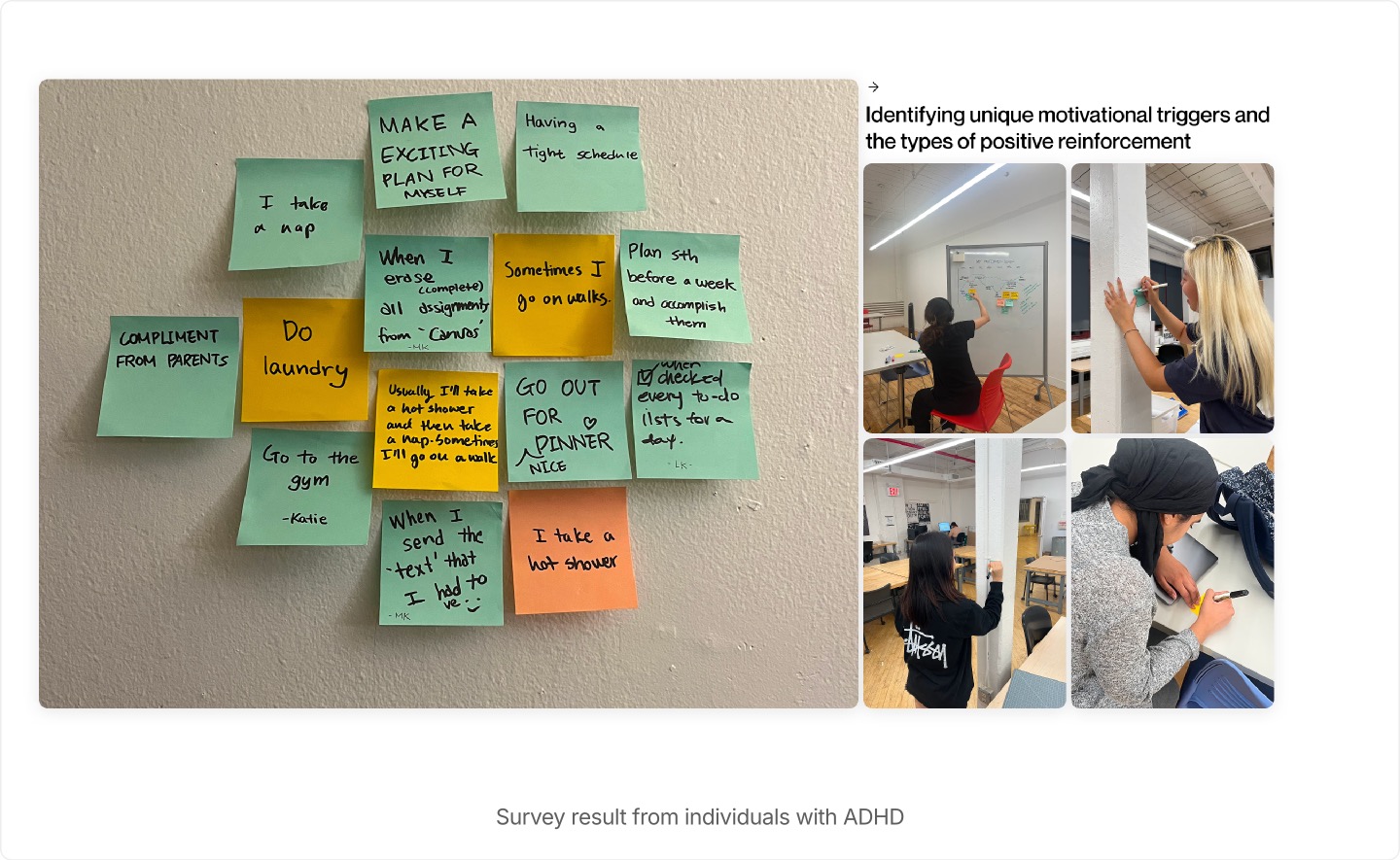
I surveyed 11 students with ADHD about what motivated them and what got in the way. After setting aside areas they already felt confident in, one pattern came through clearly.
“No existing planning tool effectively provides rewarding or motivating feedback tailored to individuals with ADHD.”
Stream 3: Literature review
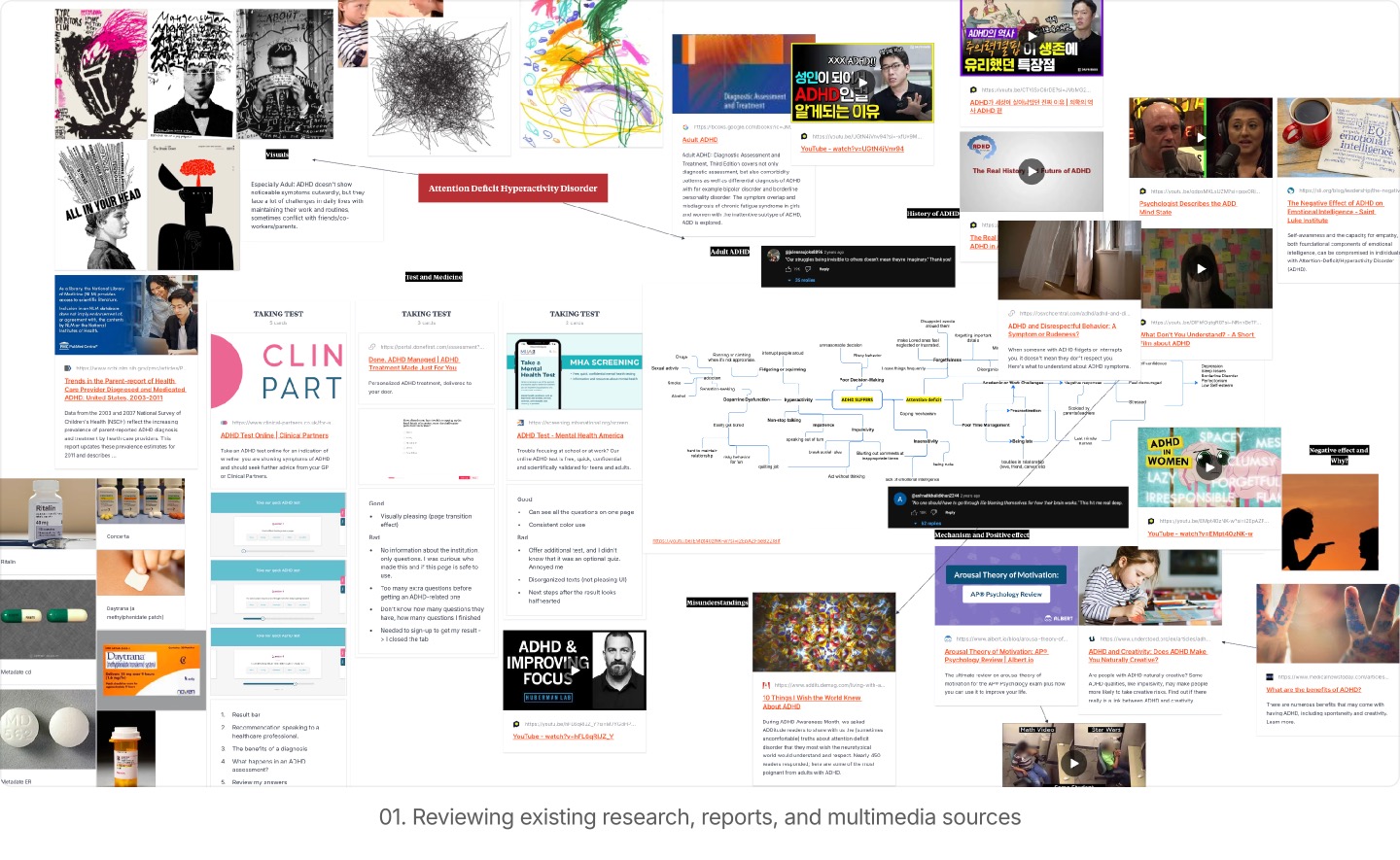
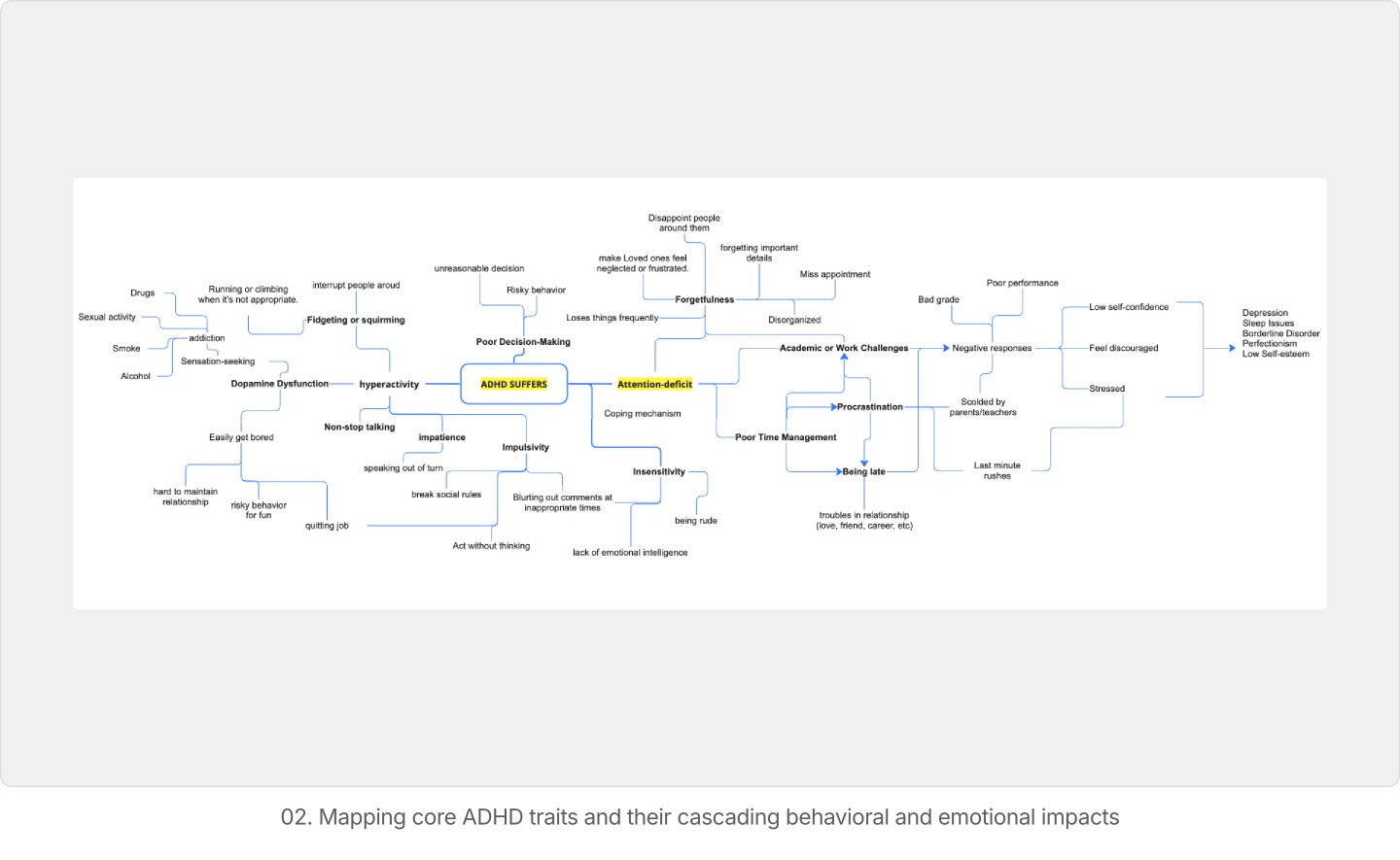
I reviewed research on ADHD neurology and existing behavioral intervention models. Three brain-level dynamics directly shaped the design direction:
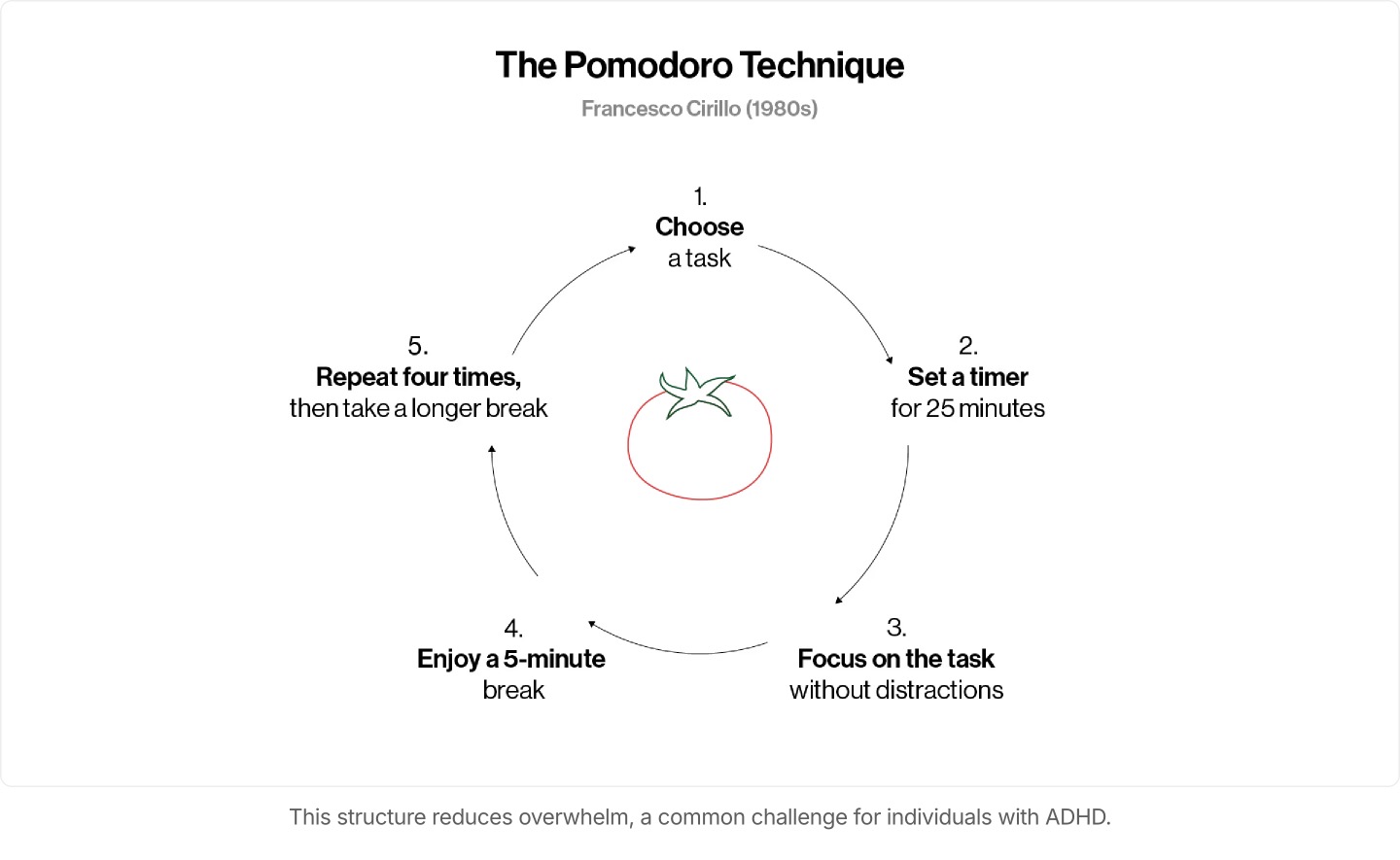
- Structure that reduces overwhelm, which is a common challenge for people with ADHD
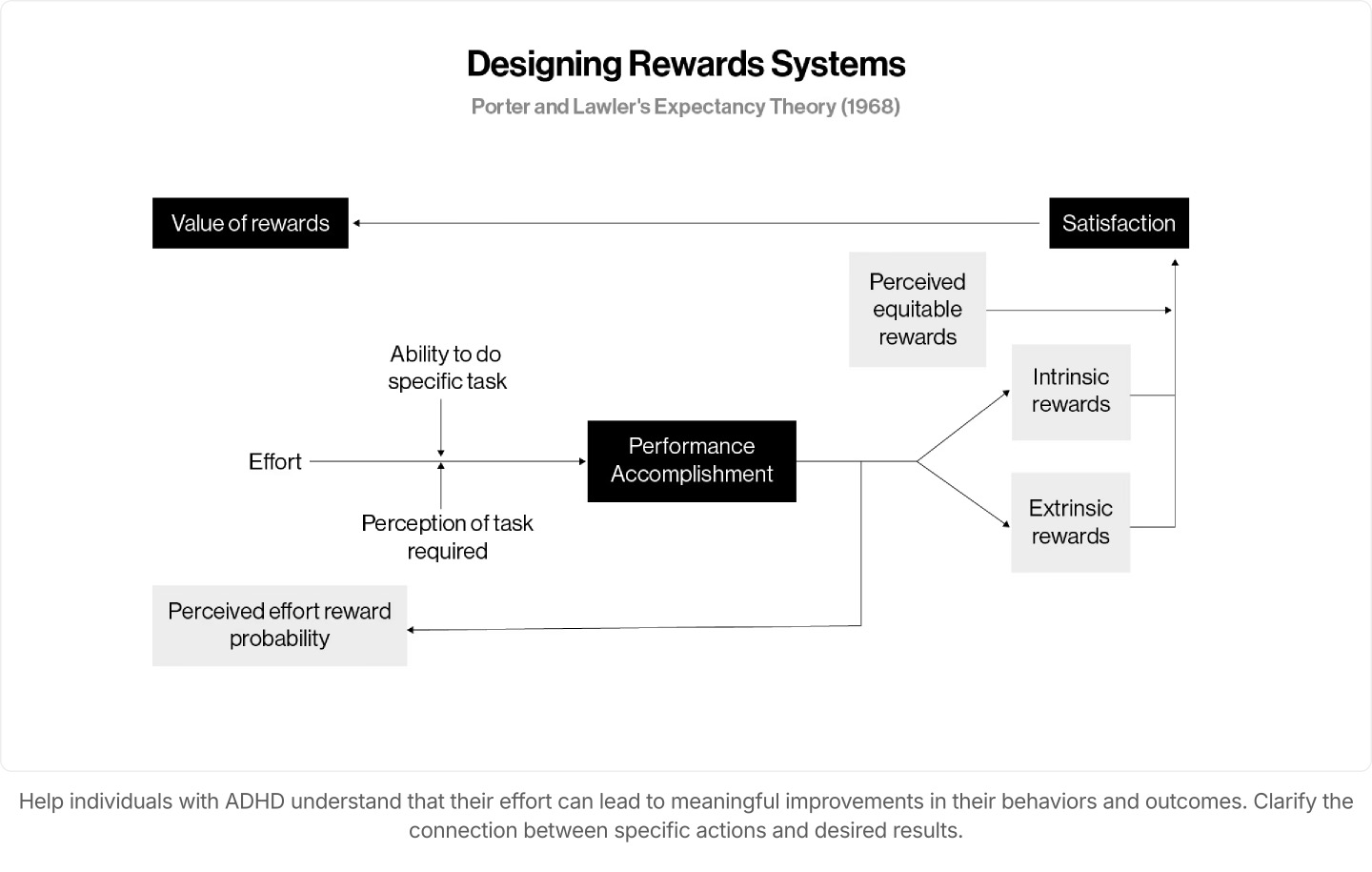
- Clear connections between specific actions and desired results, so effort feels meaningful
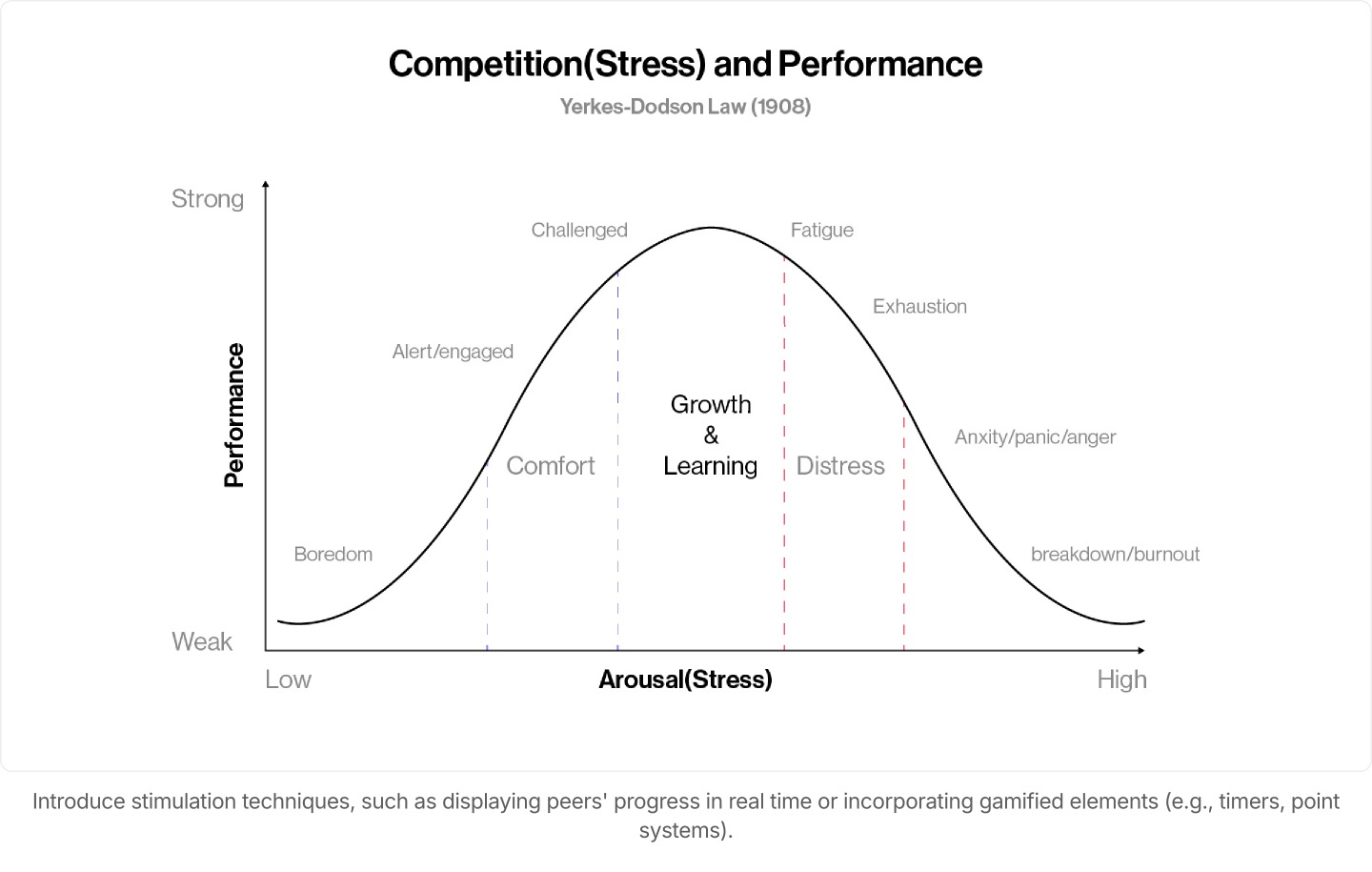
- Stimulation techniques such as peer progress visibility and gamified elements (timers, point systems)
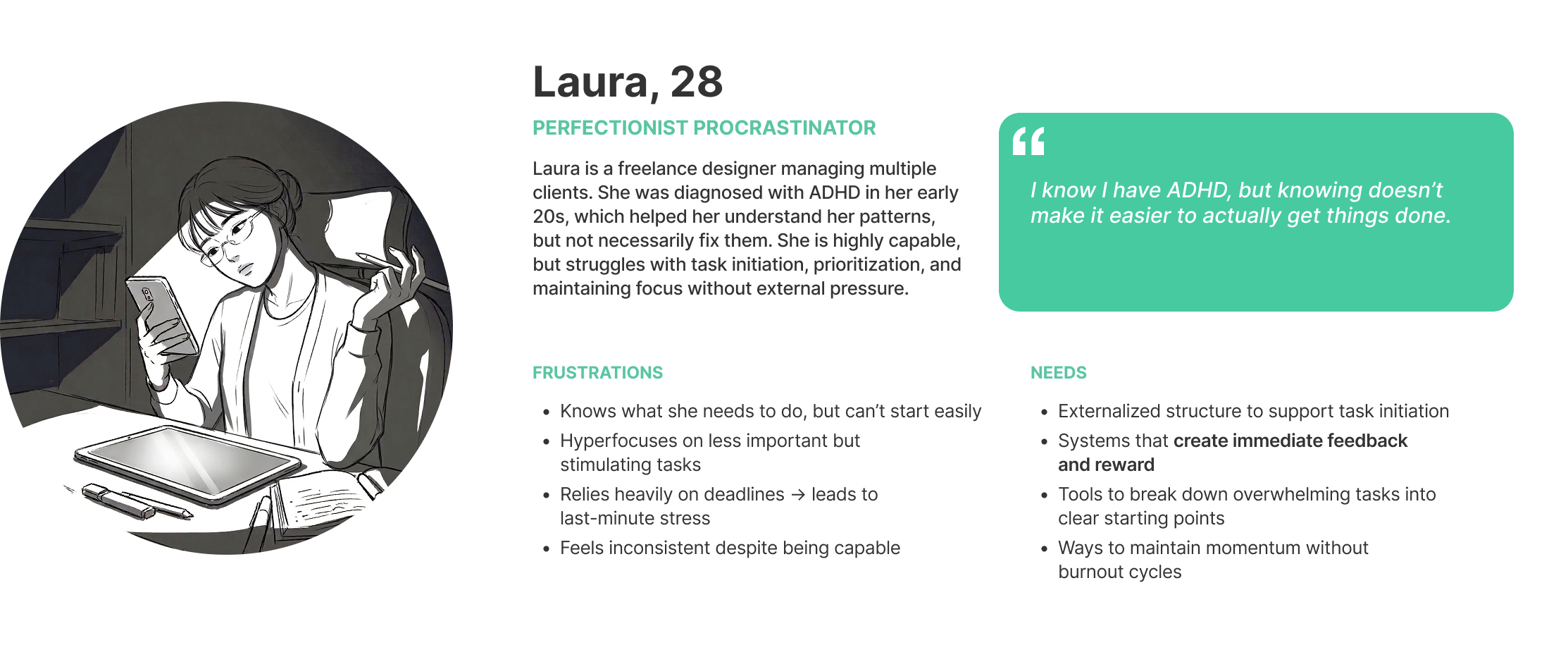
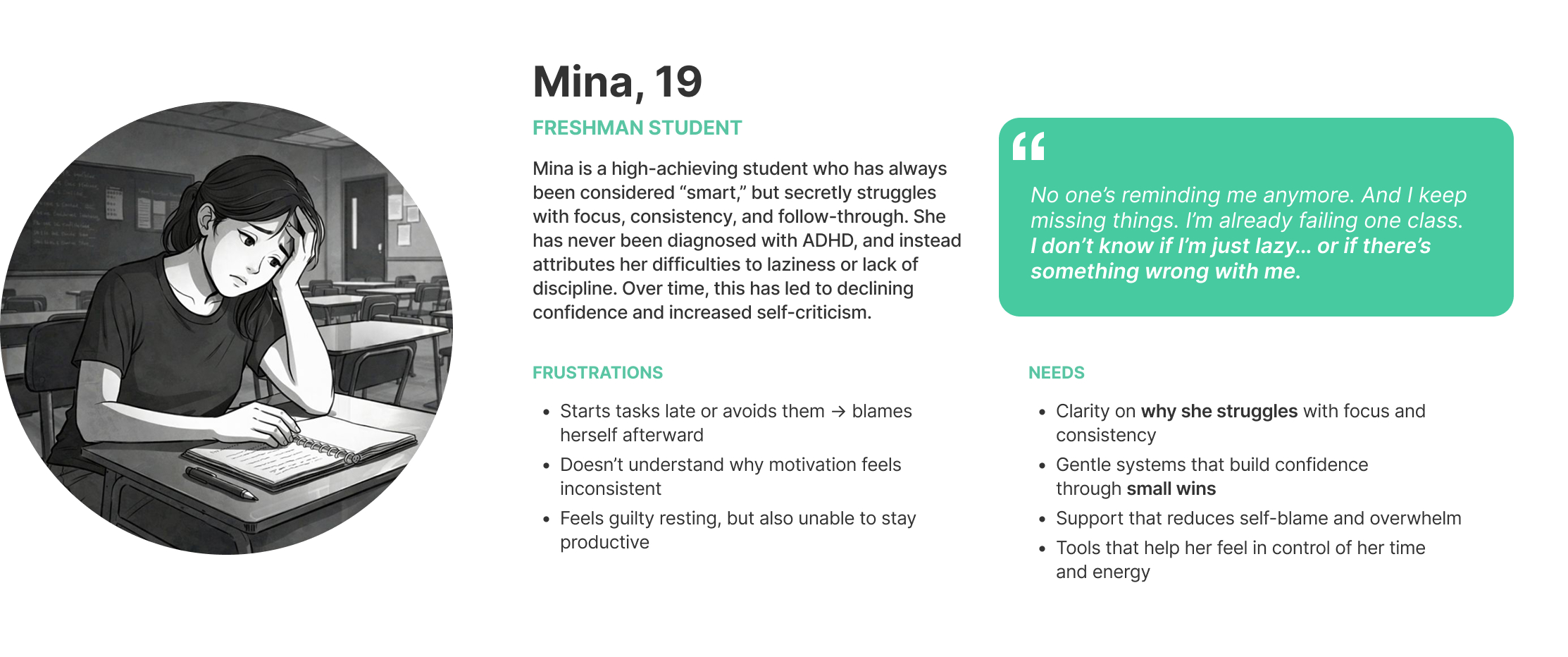
Who is this for?
Users like Laura don't lack ability. They struggle to start and stay with tasks when the work feels overwhelming or unrewarding.
05 — Solution
Three interlocking systems,
one coherent experience
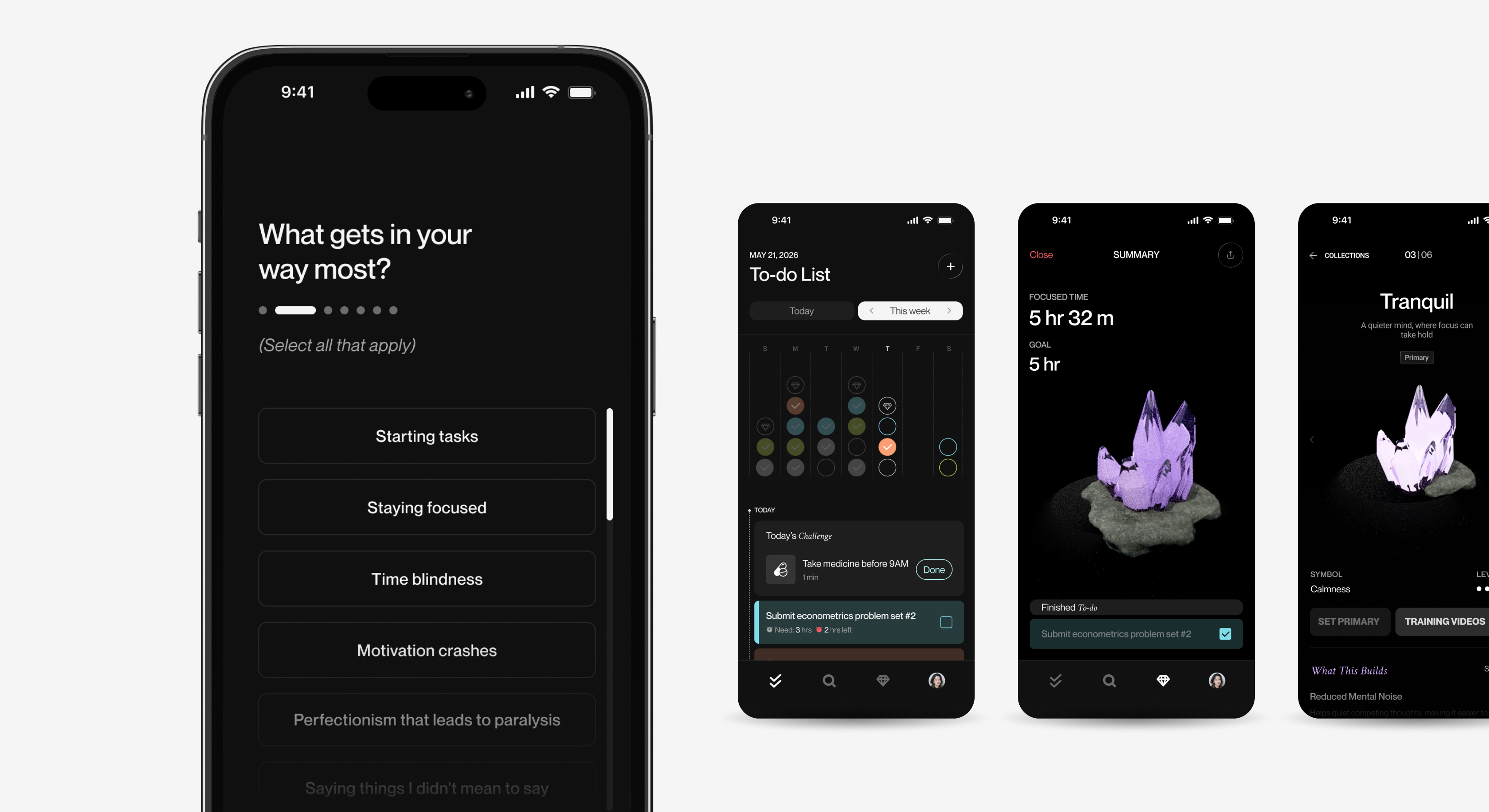
GEMI is a mobile productivity app built around one idea: your effort is real, it adds up, and you can see it. Three core systems work together to deliver that.
Reflection
What I learned
The decisions that mattered most weren't visual. They were structural: no streak penalties, social features that stay opt-in, progress that only adds. I wanted the app to feel like it was on your side, and that takes the same care as the layout.